
Let’s think about this for a second. In one lifetime, we’ve gone from rotary phones to smartphones that can basically read your mind. We’ve watched the internet get invented, cars start driving themselves, and computers shrink down from filling a whole room to fitting in your pocket.
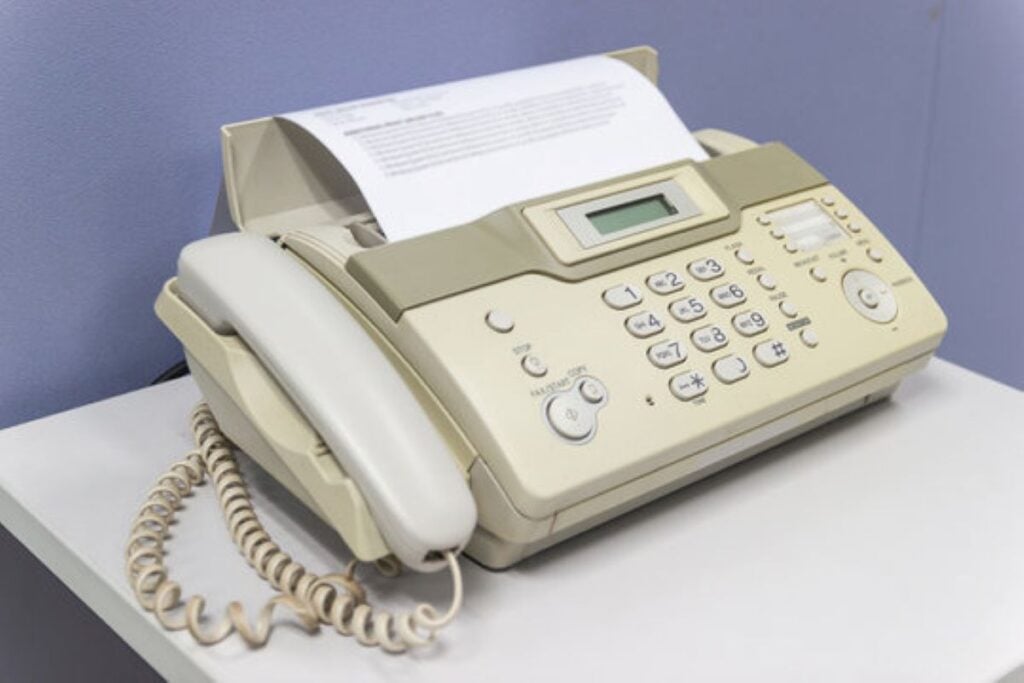
And yet… you’re still standing at the doctor’s office watching someone fax over your paperwork.
Kind of funny when you think about it, right? We’ve got all this amazing new technology, but somehow, a bunch of old, clunky stuff just refuses to go away. It’s not that these things still work great. It’s more like nobody ever got around to actually replacing them. They got stuck in the system years ago, and now we’re all just… going along with it.
So we put together a list of everyday things that don’t really make sense anymore, but somehow we’re all still using them anyway. Some will make you laugh. Some will make you go “wait, why do we still do that?” Either way, get ready to nod along, because you’ve probably dealt with every single one of these.
1. Fax Machines
Still required at the doctor’s office and law firm. Why hasn’t email replaced this?
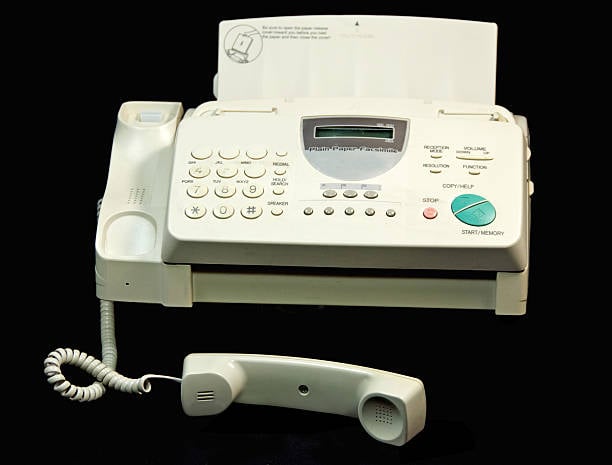
Think about this for a second: you can video call your grandkids on the other side of the world, but if you need to send a form to your doctor, you might still have to fax it. Feels backwards, right?
Here’s the thing about fax machines — they send a paper copy through phone lines, kind of like a phone call, but instead of talking, it’s sending a picture of your paper. It was amazing back in the day. But now? We have email, which does the same job in two seconds instead of five minutes of beeping and screeching.
So why do doctors’ offices, law firms, and government buildings still use them? Mostly because “that’s just how it’s always been done.” Fax machines got baked into old systems years ago, and swapping them out means retraining staff, buying new equipment, and trusting a whole new way of doing things. Nobody wants to be the one who breaks the system, so everyone just… keeps faxing.
The kicker? Faxes actually aren’t even that safe. People assume they’re private, but anyone standing near that machine at the other end can see what’s coming through. So we’re still using an old, slow, semi-public way to send stuff, mostly out of habit.
2. The QWERTY Keyboard
Literally designed to slow typists down for 1870s typewriters. We never fixed it.
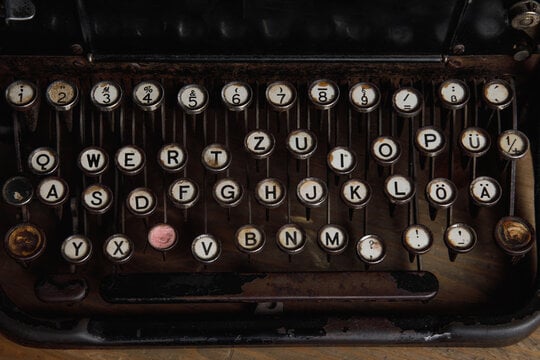
Ever wonder why the keyboard letters aren’t in ABC order? There’s a real reason — and it’s kind of funny.
Back in the 1870s, typewriters had little metal arms for each letter. If you typed too fast, and two arms next to each other got used back-to-back, they’d jam together. So the guy who invented this layout spread out the commonly used letters, on purpose, to slow typists down a little and stop the jamming.
That layout is called QWERTY, named after the first six letters on the top row. And here’s the funny part: we don’t use typewriters with metal arms anymore. Nothing can jam on a computer or phone keyboard. The whole reason for this layout disappeared decades ago.
So why are we all still typing on it? Because once something becomes the standard, it’s really hard to undo. Everyone learned QWERTY in school. Every keyboard is built this way. Every phone, laptop, and tablet copies it. There are actually better, faster layouts out there — one called Dvorak was designed to put the most-used letters right under your fingers. But almost nobody uses it, because retraining your fingers (and everyone else’s) just isn’t worth the hassle.
So we’re all typing a little slower than we need to, every single day, because of a problem that got solved over a hundred years ago.
3. Paper Checks & Checkbooks
Still needed for rent, HOA fees, and that one stubborn landlord.
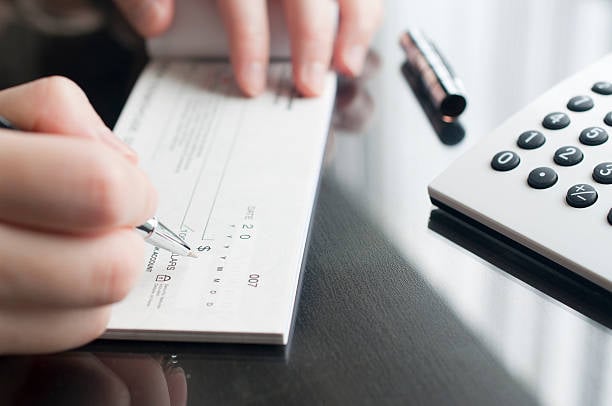
You can send someone money instantly with just a phone these days. So why are you still writing out “Two hundred and fifty and 00/100 dollars” by hand and signing your name like it’s 1985?
Checks made total sense back in the day. Before online banking, they were the safest way to send money without carrying cash around. You wrote one, mailed it or handed it over, and the bank took care of the rest.
But now we’ve got apps that move money in seconds. So why do we still need checks at all? Mostly because some places just haven’t caught up. Landlords, HOAs, and small businesses often don’t have the setup to take digital payments, or they just trust paper more, since it’s what they’ve always used. And once your landlord says “checks only,” you don’t really get a vote — you just go dig one out.
The annoying part is you now have to keep at least a few checks around, remember how to fill them out, and hope you don’t run out right when rent is due. It’s a whole extra step for something a five-second app tap could handle.
4. “Press 1 for English” Phone Trees
Ten minutes of menu options before you reach a human (if you ever do).
You know the drill. You call a company because something’s wrong, and instead of a person, you get a robot voice. “Press 1 for billing. Press 2 for account help. Press 3 to hear these options again.” By the time you get through it all, you’ve forgotten why you even called.
These systems are called phone trees, and companies use them to sort calls before a real person picks up. The idea isn’t totally crazy — it’s supposed to get you to the right department faster. But somewhere along the way, companies realized these menus also save them money, since fewer people means fewer employees answering phones. So instead of helping you, a lot of these systems are really designed to make you give up and go look for an answer online instead.
That’s why you can end up pressing numbers, repeating yourself to a computer that “didn’t quite get that,” and going in circles for ten minutes before ever hearing an actual human voice. And even when you do get through, there’s a good chance you’ll get transferred and have to explain your whole problem all over again.
It’s supposed to feel like customer service. Most days, it feels more like a maze with hold music.
Read Also: 8 Things Only People Who Grew Up Without Central Heating in the 1970s Remember
5. Voicemail
Nobody listens to it, everybody still has to set it up.
Be honest — when’s the last time you actually listened to a voicemail? For most people, the answer is “not in a while.” These days, if someone really needs you, they’ll text. But somehow, every phone still comes with voicemail built in, and you still have to set it up like it’s the most important feature on there.
Voicemail used to be a big deal. Before texting existed, it was the only way to leave someone a message if they didn’t pick up. You’d call, hear the beep, and leave your message. Simple.
Now? A lot of people don’t even bother recording their own greeting — they just leave the generic robot voice saying their phone number back to you. And when someone does leave a voicemail, plenty of folks just see the notification, sigh, and text back “saw you called, what’s up?” instead of ever hitting play.
So why does voicemail stick around? Mostly because phones are built to include it automatically, and switching it off completely isn’t something most people think to do. It just sits there, quietly piling up messages nobody’s going to listen to, waiting for its moment that never really comes anymore.
6. CAPTCHA “Prove You’re Not a Robot”
Squinting at fire hydrants just to check your own bank account.
You just want to log into your bank account. Instead, you’re squinting at nine blurry little pictures, trying to figure out which ones have a traffic light in them. Is that pole part of the traffic light or not? Does the sliver of a crosswalk on the edge count? Welcome to CAPTCHA.
CAPTCHA stands for something like “a test to tell computers and humans apart,” but nobody calls it that — it’s just “that annoying picture thing.” The whole point is to stop bots and hackers from breaking into websites by making you prove you’re an actual person, not a computer program.
That part makes sense. The problem is how annoying it’s gotten. What used to be typing a couple of squiggly letters has turned into picking out bicycles, crosswalks, and fire hydrants from grainy photos, sometimes more than once, because you “missed one.” It can feel like the test is more confused about what counts as a stop sign than you are.
The really funny part? These tests actually get harder as computers get smarter, because bots keep getting better at solving the easy ones. So instead of things improving, the puzzles just keep getting trickier for us regular humans, all so a website can be sure you’re not a robot trying to steal your own money.
7. Password Rules
One capital, one number, one symbol, don’t reuse the last 12 — for a site you’ll visit once a year.
You know the drill. You try to make a password, and the website tells you it needs a capital letter, a number, a symbol, and it can’t be anything close to the last 12 passwords you’ve ever used. For a site you’ll maybe log into once a year to renew something.
So you end up doing what everyone does — you type something like “Sunshine1!” and hope you remember it next time. Spoiler: you won’t. You’ll end up clicking “forgot password” anyway, which kind of defeats the whole point.
These rules were made with good intentions. Simple passwords are easier for hackers to guess, so adding capitals, numbers, and symbols was supposed to make your account safer. Makes sense on paper.
But here’s the catch — most people aren’t creative password wizards. When forced to add a number, folks just tack a “1” onto the end. Forced to add a symbol? There’s an exclamation point at the end. Hackers know this. So a lot of these “extra safe” passwords aren’t actually much safer, just more annoying to remember.
The real fix experts talk about now is using a long, random string of words instead, since that’s actually harder to crack. But most websites still cling to the old rulebook, so we all keep doing password gymnastics for accounts we barely use.
8. Daylight Saving Time
Started for farmers who never asked for it; we still spring forward for no clear reason.
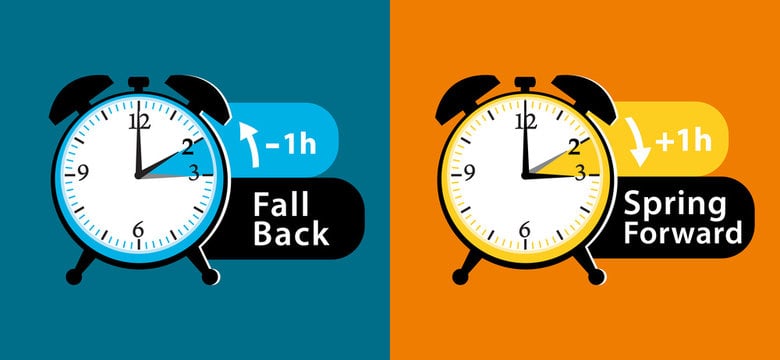
Every spring, we all lose an hour of sleep, and every fall, we get it back. And every single year, someone asks the same question: why do we even do this?
Here’s a fun fact — farmers didn’t actually ask for daylight saving time. That’s a common myth. It really started so people could save on energy, back when using less electricity in the evening actually mattered a lot more than it does today. The idea was, if it stays lighter later, people won’t need to turn their lights on as early.
These days, that reasoning doesn’t hold up so well. We’ve got energy-efficient lights, air conditioning, and gadgets running all day long anyway, so the “savings” aren’t really much to write home about. Meanwhile, springing forward messes with our sleep, our moods, and even shows up in a few extra car accidents in the days right after the switch, since everyone’s a little more tired than usual.
So why do we still do it? Mostly because changing it means every state, business, and airline schedule would need to get on the same page — and that’s a lot harder than it sounds. So instead, we all just keep adjusting our clocks twice a year for a reason most of us can’t even really explain anymore.
Read Also: What the One Thing You Kept From Your Childhood Home Says About You
9. Physical Car Keys & Fobs
Cars can practically drive themselves, but we’re still stabbing an ignition slot.
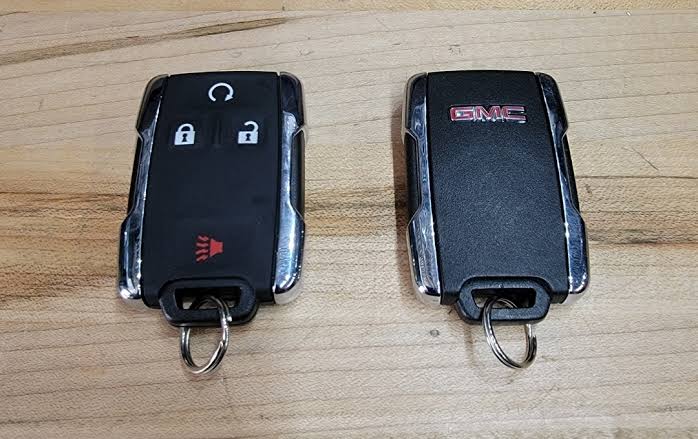
Cars these days can parallel park themselves, warn you before you drift into another lane, and practically drive on their own. But a lot of us are still fumbling around trying to jab a metal key into a slot, or digging through a bag for a fob because the battery’s dying and the car won’t unlock unless you hold it just right.
It’s a little wild when you think about it. We trust cars to handle steering and braking for us now, but starting the thing still feels stuck in an older era.
Some newer cars have moved to keyless setups, where you just need the fob nearby and a push-button start. That’s a nice step up. But plenty of people are still driving cars with the old-school metal key, or a fob that needs a battery change every so often, or that annoying trick where you have to jiggle the key just right to get it to start.
Why hasn’t this fully caught up everywhere? Cars last a long time, so millions of older ones are still on the road with their original key systems. Fully keyless and phone-based systems are still catching on, and not everyone trusts leaving their car unlocked without a “real” key backup. So for now, a lot of us are stuck halfway between the future and a jingling set of keys in our pocket.
10. Printers
Decades of “innovation” and they still jam on page one.
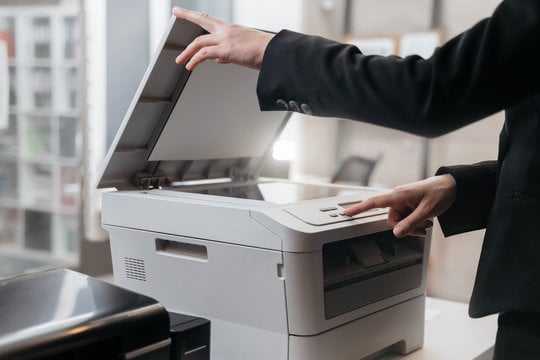
We’ve had printers for decades now. You’d think by 2026 they’d have this figured out. And yet, somehow, printing one simple page can still feel like defusing a bomb.
You hit print, and the little light starts blinking. Then it tells you the ink is low, even though you just replaced it. Then page one jams halfway through, and now you’re pulling out trays, opening random little doors on the side, and hoping you don’t rip the paper worse trying to get it out.
Here’s the annoying secret: printer companies don’t always want printers to be perfect. Ink is where a lot of the money is made, not the printer itself. Some printers are even built to think ink is empty a little early, just to get you buying more, sooner. And paper jams often happen because of cheap little rollers inside that wear out or don’t grip the paper quite right, something that’s honestly easy to design better.
So while phones, computers, and basically everything else got faster and smarter, printers kind of got left behind. They still jam, still run out of ink at the worst time, and still make you feel like you need a little luck just to get one page out clean.
11. Elevator “Door Close” Buttons
Often not even wired to anything. A tiny act of theater.
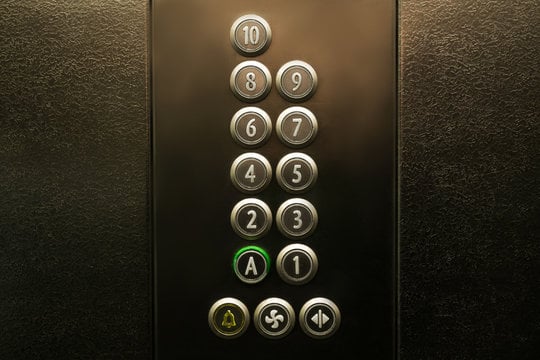
You step into the elevator, you’re in a hurry, so you jab that “door close” button like it’s going to save you five whole seconds. Here’s the twist — in a lot of elevators, that button doesn’t actually do anything at all.
It’s true. Many elevators, especially in the U.S., have this button wired to do nothing, or close, so it doesn’t skip that time. Building codes often require elevators to stay open long enough for someone slower, someone in a wheelchair, or someone with kids to get on safely. So the doors are already set to close on their own timer, no matter how many times you mash that button.
So why is it even there? Turns out, it’s mostly there for us. Studies on this kind of thing show people feel calmer and more in control when they feel like they’re doing something, even if it’s not actually speeding anything up. It’s the same idea behind some crosswalk buttons that don’t really change the light faster, either.
So next time you’re stabbing that button like it owes you money, just know — you’re basically pressing a tiny, harmless “pretend” button. It’s not lying to hurt you. It’s just there to make the wait feel a little less annoying.
12. Cursive Signatures on Legal Documents
Nobody’s taught cursive in schools anymore, yet it’s still how we “prove” it’s really us.
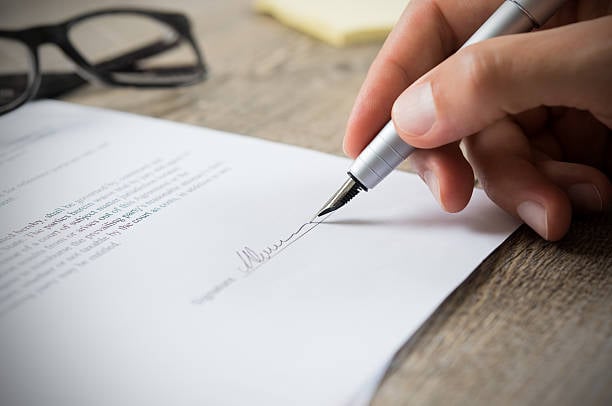
Go sign a lease, a loan, or any big legal paper, and there it is — that little line waiting for your signature. The funny part? A lot of kids today were never even taught cursive in school. So we’re asking a whole generation to “sign here” using a skill a lot of them never fully learned.
Signatures used to make a lot of sense. Back before computers, your handwriting was one of the only personal, hard-to-copy things tied to you. A signature was like a little fingerprint made of ink, and it felt official because it was unique to you.
But here’s the thing — signatures aren’t nearly as unique or secure as we treat them. Plenty of people don’t even sign the same way twice. Some folks just scribble a squiggly line and call it good. And copying someone’s simple signature isn’t exactly hard for someone determined to fake it.
Meanwhile, we’ve got real ID checks now, like fingerprints, face scans, and passcodes, that are way harder to fake than a signature ever was. But legal paperwork still leans on “sign here,” partly out of tradition, and partly because changing legal systems takes forever. So we keep signing our names in a skill that’s slowly fading, just to prove we really are who we say we are.
Read Also: 23 “Outdated” House Rules Our Grandmothers Followed That Quietly Made Life Better
Final Thoughts…
None of these things are going to ruin your day. Nobody’s life falls apart because of a stuck fax machine or a squiggly CAPTCHA. But add them all up, and they’re a pretty funny reminder that “progress” doesn’t move as fast, or as evenly, as we like to think.
We can build cars that drive themselves, but we still can’t get rid of a car key. We can talk to someone on the other side of the world in seconds, but a fax machine is still somehow required paperwork. It’s not that we can’t fix these things. It’s just that fixing them isn’t anyone’s top priority, so they just… stick around.
So now we want to hear from you. What’s your most annoying “why do we still do this?” moment? The one thing you deal with regularly and just shake your head at? Drop it in the comments — chances are, a bunch of other people are dealing with the exact same thing.
Because maybe the real useless thing here isn’t the fax machine or the CAPTCHA test. Maybe it’s just our patience, waiting around for someone to finally fix all this stuff.