
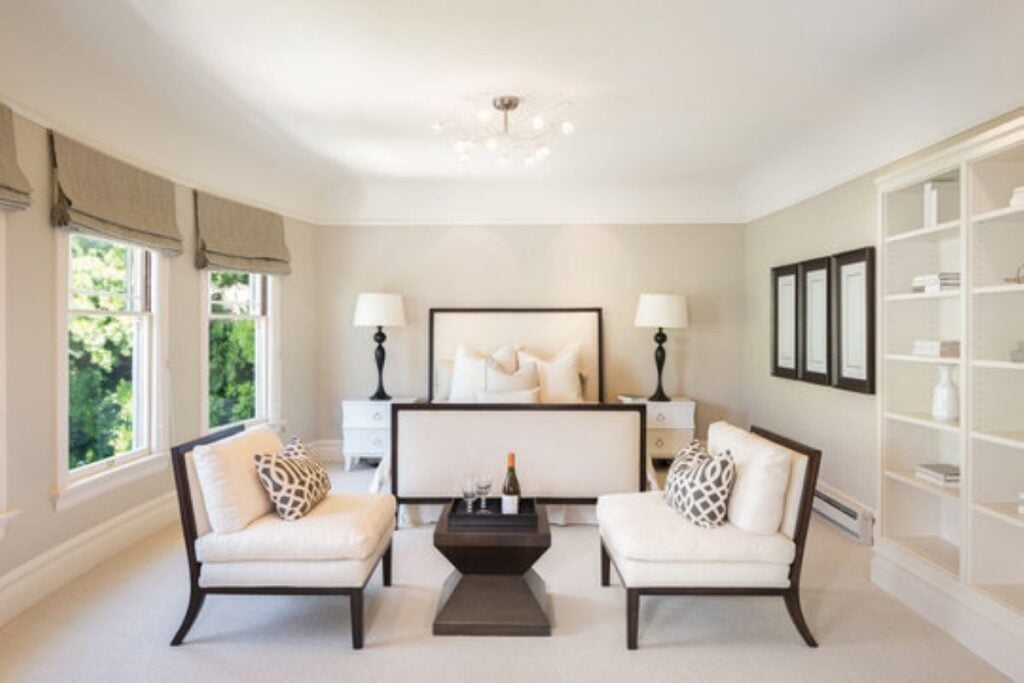
Ever walk into a house that’s for sale and think, “Wow, this feels fancy” — even though it’s the same size and price range as your place? That’s not an accident. That’s staging.
People who stage homes for a living have a whole bag of tricks to make a house feel more expensive than it is. And here’s the good news: almost none of it costs real money. It’s not about ripping out your kitchen or buying new furniture. It’s about a bunch of small, sneaky changes that most people never even notice — they just notice the house looks good.
We asked around (okay, we did our homework) and pulled together 12 of these tricks. They’re all cheap, all doable in a weekend, and all things you can start on today.
1. Edit, Don’t Just Tidy
Here’s the thing — tidying up and editing are not the same. Tidying means putting stuff away. Editing means getting rid of stuff completely.
Stagers don’t just organize a room. They pull out 30 to 50% of everything in it. Books off shelves. Extra pillows off the couch. Half the stuff on the kitchen counter. Gone. Not hidden in a closet — actually removed from the house (usually packed away in bins somewhere out of sight).
Why does this work so well? Because a room full of stuff — even neatly organized stuff — still looks busy and cramped. Your eyes don’t know where to land. But a room with fewer things in it feels calm, open, and honestly, expensive. Think about it: fancy hotels and stores don’t have cluttered shelves. There’s always breathing room.
Try this: Pick one room and remove a third of what’s in it. Pack it in a box, don’t just shove it in a drawer. See how different the room feels.
2. Swap the Hardware
This one’s almost too easy to believe. The knobs and handles on your kitchen cabinets and bathroom vanity? They’re doing more work than you think.
Old, cheap, or mismatched hardware makes an entire kitchen look outdated — even if the cabinets themselves are in great shape. Swap them out for something simple and modern (think matte black, brushed gold, or brushed nickel), and suddenly the whole kitchen feels like it got a mini makeover. It’s wild how much of a difference it makes for something so small.
The best part? Cabinet pulls and knobs usually cost somewhere between $2 and $5 each, and you can swap them with just a screwdriver. No contractor, no special tools, no big time commitment.
Try this: Pick one finish (like matte black) and use it on every knob and pull in the kitchen. Matching finishes make a much bigger difference than people expect.
3. Layer Your Lighting
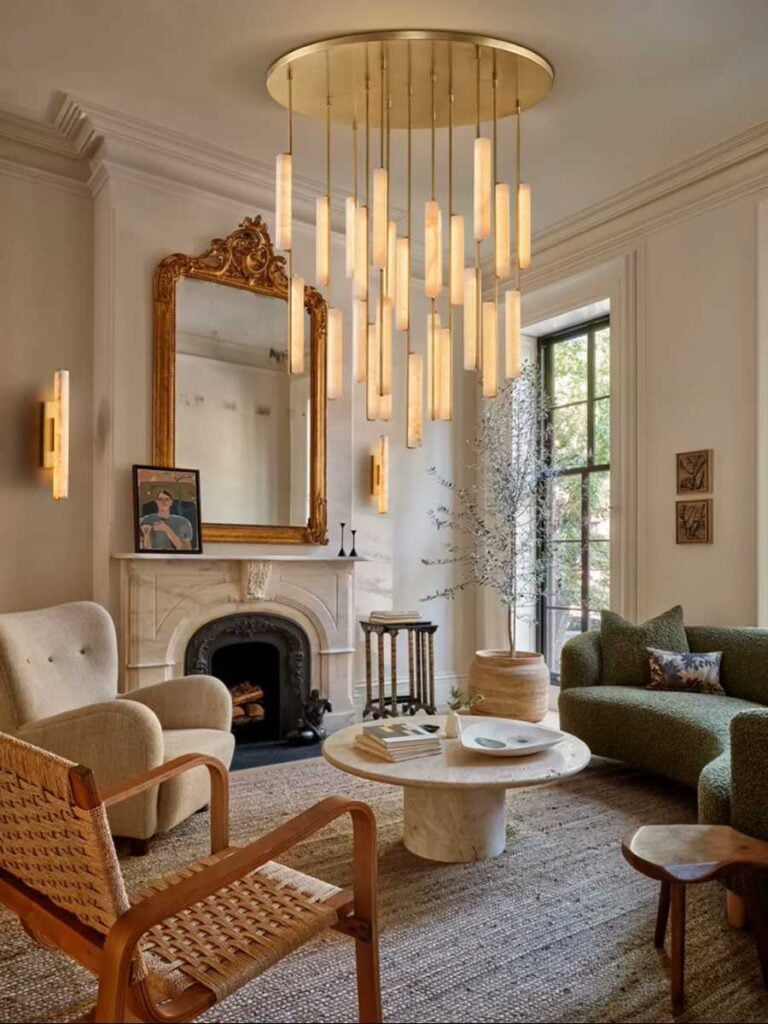
Does your living room only have one light source — like a single overhead light or ceiling fan light? If so, that’s probably making the room feel flatter and less cozy than it could.
Stagers almost never rely on just one light. Instead, they “layer” lighting by adding lamps around the room — a floor lamp in the corner, a table lamp by the couch, maybe a little one on a bookshelf. Having light coming from different spots (instead of just one harsh light from above) makes a room feel warmer, softer, and way more put-together.
The bulbs matter too. Skip the bright white or blue-ish bulbs — those can make a room feel like a hospital waiting room. Go for warm-toned bulbs instead, somewhere in the 2700K to 3000K range (that number is usually right on the box). Warm light feels cozy and inviting, which is exactly the vibe you want.
Try this: Grab one or two lamps you already own (or find cheap ones secondhand) and place them in a room that only has overhead lighting. Turn off the overhead light and just use the lamps. See how different it feels.
4. Paint Is the Cheapest Facelift
If you could only do one thing off this whole list, paint might be it. A gallon of paint costs way less than almost any other home upgrade, but it can completely change how a room feels.
Stagers love warm neutrals — think soft whites, warm greiges, or light tans instead of stark white or cold gray. Warm colors feel more welcoming and, weirdly enough, more expensive. Cold colors can make a space feel sterile, like an office.
Don’t stop at the walls, either. Painting doors and trim (the wood frames around doors and windows) in a fresh, matching color instantly makes a room look cared for. And here’s a trick a lot of people don’t think about: painting the ceiling too. A plain white ceiling is fine, but painting it the same color as the walls (or a shade lighter) can make a room feel bigger and more polished — almost like it was designed by someone who knew what they were doing.
Try this: Start with trim and doors if a full room feels like too much. It’s a smaller job but still makes a noticeable difference.
Read Also: 10 Simple Habits That Keep Your Home Spotless All Year Long
5. Replace Switch Plates & Outlet Covers
Okay, this one’s so small it sounds fake, but stick with me. Look at your light switch covers and outlet covers right now. Are they a little yellow? A little dingy? Maybe even cracked?
Here’s the thing — those plastic covers yellow over time, especially in kitchens and bathrooms. Most people walk past them every single day and never notice. But your brain notices, even if you don’t consciously clock it. It’s one of those tiny details that quietly makes a whole room feel older and less cared for.
Swapping them out is ridiculously cheap — we’re talking about $1 per cover — and takes about two minutes each with just a screwdriver. It’s one of the easiest wins on this whole list.
Try this: Do a quick walk through your house and check every switch plate and outlet cover. Replace any that look yellowed, cracked, or just old. Buy a pack of plain white or matching ones so they’re all consistent.
6. Recaulk & Regrout
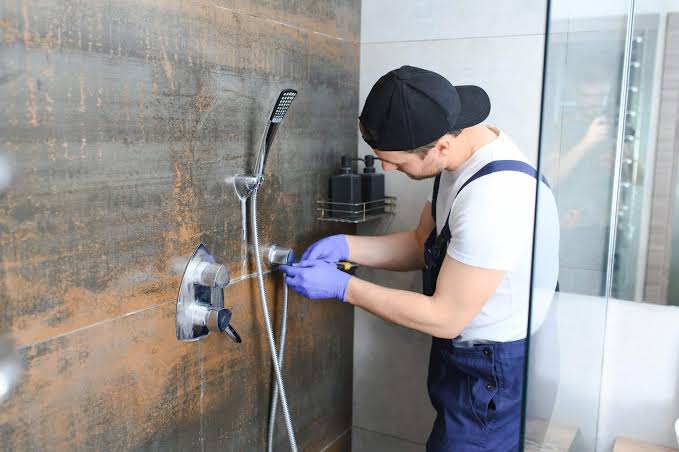
Nobody wants to talk about caulk. I get it. But this is one of those things that makes a bathroom or kitchen look either “just renovated” or “kind of gross,” and there’s almost nothing in between.
Caulk is that white (or clear) sealant around your bathtub, sink, and countertops. Over time it gets yellow, cracked, or even a little moldy-looking. And grout — the stuff between your tiles — gets dingy and gray no matter how much you scrub it. Even a spotless bathroom can look old and worn out if the caulk and grout are in bad shape.
The good news is that fixing this is cheap and doesn’t take special skills. A tube of caulk and a grout pen (yes, that’s a real thing — it’s basically a marker that recolors grout) will run you under $20 total. A few hours of work and your bathroom can look like it just got redone, even though nothing actually changed except the caulk and grout.
Try this: Start with your bathtub or shower. Pull out the old, cracked caulk, clean the area, and lay down a fresh line. It’s oddly satisfying, honestly.
Read Also: 14 Hidden Sources of Bad Smells Around Your Home Almost Every Homeowner Misses
7. Go Big Instead of Busy
Here’s a mistake a lot of people make without realizing it: filling a wall with a bunch of small picture frames instead of one big piece.
Small frames scattered everywhere can look cluttered, even when it’s meant to look cool and personal. Your eyes have to jump around trying to look at everything at once, and it can make a whole wall feel busy and chaotic. Stagers do the opposite. They pick one big piece — a large piece of art, a big mirror, or even just one large photo — and let it be the star of the room.
One big thing on a wall automatically feels more expensive and intentional than a bunch of small things. It looks like a choice, not a collection that happened by accident. And bonus: a large mirror does double duty by making the room feel bigger and bouncing light around.
Try this: Take a wall that has a bunch of small frames and try swapping them for one oversized piece instead. Thrift stores and marketplace apps are great for finding big, cheap frames or mirrors.
8. Size Your Rugs Correctly
This is probably the most common decorating mistake out there, and it’s called the “postage stamp rug.” That’s when a rug is way too small for the room — like a tiny stamp floating in the middle of a big empty wall of floor.
A rug that’s too small makes a whole room look off, even if you can’t quite explain why. It kind of shrinks the space and makes the furniture look like it’s just plopped down randomly instead of arranged on purpose. Stagers follow a simple rule instead: the rug should be big enough that at least the front legs of your furniture (couch, chairs) sit on it. Ideally, all four legs.
You don’t need to spend a fortune on a new rug either. Sizing up — even with a budget-friendly rug — instantly makes a living room or bedroom feel more pulled-together and, yep, more expensive.
Try this: Measure your current rug and your furniture. If your couch is floating off the edge of the rug, it’s probably time to size up.
9. Add Real (or Convincing Faux) Greenery
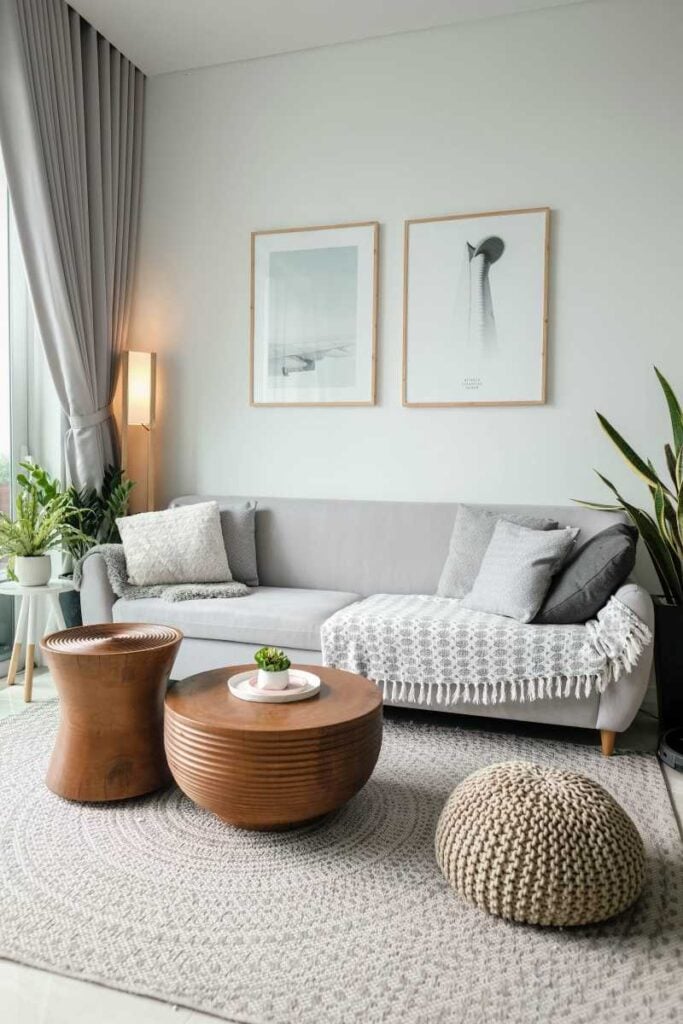
An empty house feels cold. A house with even one or two plants in it feels alive. That’s basically the whole reason this trick works.
Plants tell your brain that a space is cared for. Think about it — dead or empty-looking rooms feel unloved, but a little greenery makes everything feel more welcoming, more lived-in, and honestly, more expensive. It’s a small thing that does a lot of emotional work without you even realizing it.
You don’t need a green thumb for this one either. Real plants are great if you can keep them alive (a snake plant or pothos is nearly impossible to kill), but good fake plants have come a long way too. Nobody’s going to walk up and touch the leaves to check. As long as it’s not the shiny, obviously-plastic kind from years ago, a faux plant does the job just fine.
Try this: Grab one medium-sized plant (real or fake) for an empty corner, and a small one for a shelf or table. Two plants can completely change how a room feels.
10. Coordinate Closet Hangers
This one feels almost silly until you actually do it — then you get it immediately.
Most closets have a random mix of hangers: some wire ones from the dry cleaner, some plastic ones in different colors, maybe a few chunky ones mixed in. On their own, none of that seems like a big deal. But all together, it makes a closet look messy and thrown-together, even if your clothes are hung up neatly.
Stagers swap every single hanger for matching ones — usually wood or velvet — and it’s honestly one of their favorite tricks. Matching hangers instantly make a closet look like it belongs in a fancy hotel or a magazine, even if the clothes inside are exactly the same as before. It’s a weirdly small change with a big payoff.
Try this: Velvet hangers are cheap and sold in big packs online. Swap out one closet at a time and see how much cleaner it looks, even without changing anything else.
11. Use Mirrors Strategically
Mirrors aren’t just for checking your outfit — they’re one of the easiest ways to make a room feel bigger and brighter without moving a single wall.
Here’s how it works: mirrors bounce light around a room. So if you put one across from a window, it reflects natural light back into the space, making the whole room feel brighter. And because mirrors show a “reflection” of the room, they trick your eyes into thinking the space is bigger than it actually is. That’s why small rooms with a big mirror in them somehow don’t feel small at all.
Placement matters, though. A mirror facing a blank wall doesn’t do much. But a mirror facing a window, a nice view, or even just an open part of the room makes a real difference.
Try this: Find your smallest or darkest room and add one mirror directly across from the window. Watch how much brighter it feels almost instantly.
12. Budget Curb Appeal
First impressions happen before anyone even steps inside. The second someone pulls up to your house or walks up to your front door, they’ve already started forming an opinion. That’s why stagers spend real effort on the outside, even on a tight budget.
A few small changes make a big difference here. Painting your front door a fresh, bold color (navy, black, and deep green are popular for a reason) instantly makes a house feel more put-together. Swapping out old, faded house numbers for new ones gives off the same “someone cares about this place” feeling. A worn-out doormat is an easy fix too — grab a new one for cheap and it instantly looks more welcoming. And a couple of potted plants on either side of the door? That’s the finishing touch that makes an entryway feel like something out of a magazine.
Try this: Pick the one thing that needs it most — door, numbers, mat, or plants — and start there. You don’t have to do all four at once to notice a difference.
Read Also: 20 Things in Your Home You Should Replace Every Year (Non-Negotiable)
Bonus Quick Hits
These three didn’t need a whole section, but they’re worth doing anyway:
Clean scent, always. No lingering cooking smells, no pet odor. It doesn’t need to smell like a candle store — it just needs to smell like nothing at all. A neutral, fresh smell reads as “clean,” and clean reads as expensive.
Style things in threes. When you’re arranging stuff on a shelf or countertop (books, candles, little decor pieces), group them in odd numbers — like 3 instead of 2 or 4. For whatever reason, our brains find odd-numbered groupings more pleasing to look at. Stagers use this trick constantly.
Keep your metal finishes consistent. If your light fixtures are gold, your faucet is silver, and your cabinet handles are black, the room can feel a little mismatched — even if each piece looks fine on its own. Picking one metal finish per room (or at least per space you can see all at once) makes everything look like it was chosen on purpose.
The Bottom Line
None of this requires a renovation, a big budget, or even a full weekend. That’s kind of the whole point — the same tricks that make staged homes feel like magazine spreads are things anyone can do with a screwdriver, a paintbrush, and a little intention.
You don’t have to do all 12 at once. Pick one or two that stood out to you, try them this weekend, and see how much of a difference they actually make. Chances are, you’ll be hooked.
3 thoughts on “People Who Stage Homes for a Living Swear by These 12 Cheap Tricks to Make Your Home Look More Expensive”