
Take a look in your kitchen cabinets right now. Seriously — go check. That mismatched stack of Tupperware, that chipped mug, that heavy black frying pan you inherited from your grandma… some of that stuff might be worth way more than you think.
Right now, old and vintage stuff is having a moment. Thrift stores are getting picked clean, “grandma’s kitchen” style is all over social media, and apps like eBay and Facebook Marketplace make it easy to sell old things for real money. People are finding items in their own homes — stuff they’ve used for years without giving it a second thought — and selling it for way more than they ever paid.
Now, before you get too excited: this list isn’t about rare museum pieces or stuff you’d only find at a fancy antique shop. It’s about everyday kitchen items. Things you probably already own. Things that might be sitting in a drawer, a cupboard, or a box in the garage right now.
Here’s the thing, though — not every old item is worth money. The value usually comes down to a few things: the brand, the pattern, how rare it is, and how good of shape it’s in. So before you get your hopes up (or toss something in the donate pile), it helps to know what to look for.
Below, we’ll go through kitchen items that might be hiding in your house — what makes each one valuable, what to check for, and roughly what collectors are paying for them.
1. Cast Iron Cookware
Got a heavy black frying pan in your kitchen? Maybe one that’s been passed down in the family, or one you grabbed at a yard sale for a couple bucks? Don’t be so quick to write it off as “just an old pan.”
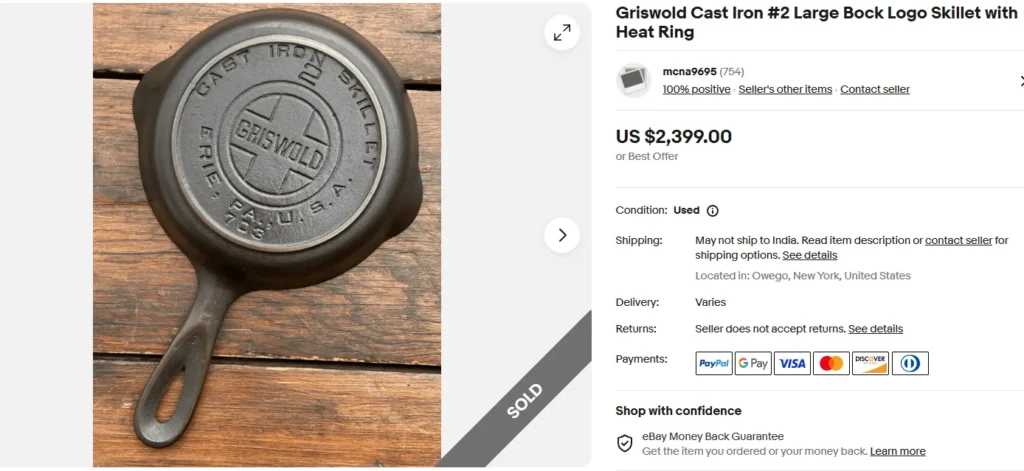
Some cast iron pans are worth way more than you’d guess — especially ones made by companies like Griswold, Wagner, or Wapak. These companies stopped making cookware decades ago, and collectors love tracking down their old pieces.
So how do you know if yours is one of the good ones? Flip it over and look at the bottom. You’re checking for a maker’s name stamped into the metal, plus a size number. Older pans (the ones with a fancy slanted logo) usually sell for more than newer ones with a plain, blocky logo.
Size matters too. Bigger pans, and weird one-off shapes like an ashtray or a tiny muffin pan, tend to bring in more money, just because fewer of them were made.
Most cast iron pans sell somewhere between $20 and $100, but rare ones can go for hundreds. Just make sure yours isn’t cracked or eaten up by rust — that kills the value fast.
2. Antique Coffee Grinders
Before coffee makers existed, people ground their beans by hand using little wooden grinders. If you’ve got one sitting around, maybe tucked away in a box from a relative’s house, it might be worth a second look.
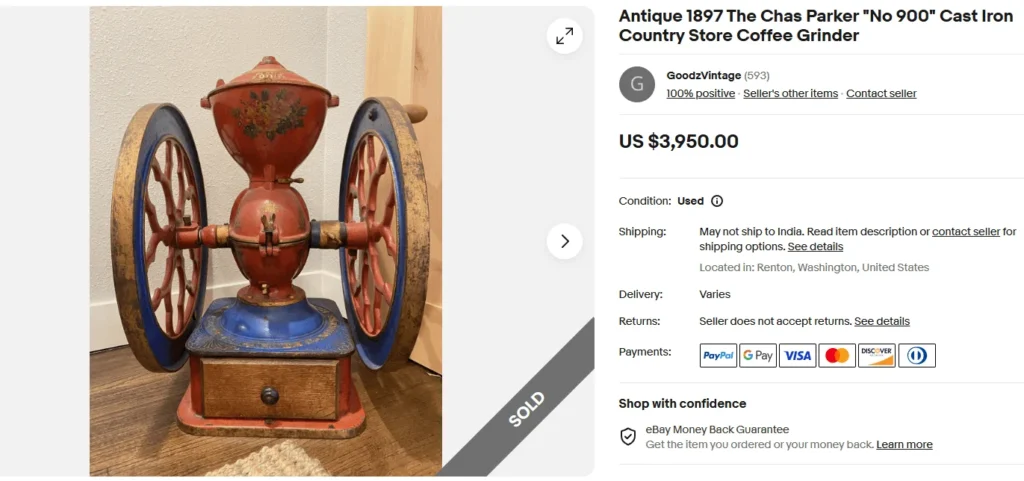
There are two main styles: ones that mount on a wall, and smaller box-style ones that sit on a counter. Brands like Arcade, Enterprise, and Elgin are the ones collectors tend to look for.
What really matters is whether all the original parts are still there. That means the hopper on top (the part you pour the beans into), the little drawer underneath that catches the ground coffee, and the hand crank. If everything’s there and it still turns the way it’s supposed to, that’s a big deal. A grinder that’s missing pieces isn’t worth nearly as much, even if it’s genuinely old.
Simple grinders usually go for around $30 to $75. But bigger, fancier ones, especially cast iron wall-mounted models, can sell for a good bit more.
3. Vintage Depression Glassware
Here’s a fun bit of history: back in the 1920s and 30s, during the Great Depression, glass companies started giving away free pieces of glassware to get people to buy their products, like putting a dish inside a box of cereal. That glass is now called “Depression glass,” and people collect it today.
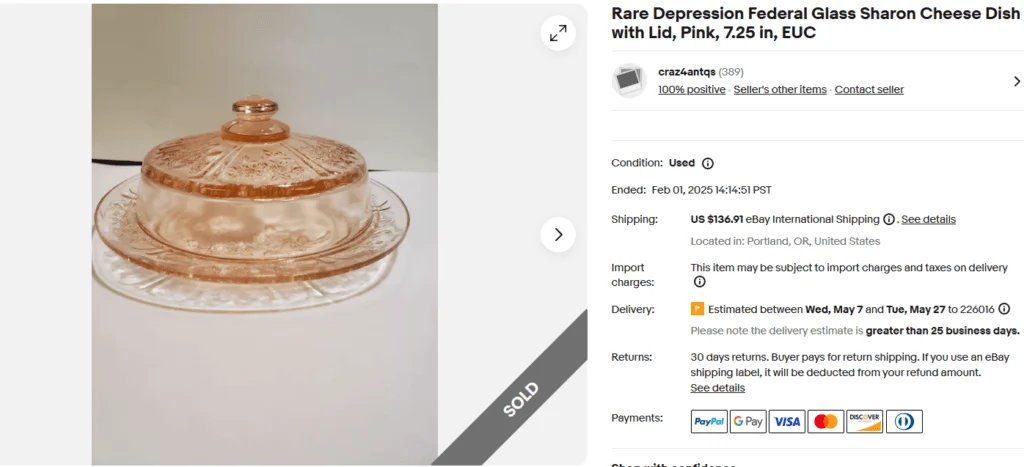
If you’ve got pale pink or light green glass dishes tucked away somewhere, especially ones with a pretty pattern pressed into them (little flowers, swirls, that kind of thing), you might have some. Common patterns go by names like Cherry Blossom, Princess, and Royal Lace.
Here’s the catch, though: pink and green pieces are pretty common, so on their own they’re not worth a huge amount. But rarer colors, like blue or amber, are worth more. And if you happen to have a full matching set instead of just a piece or two, that bumps the value up quite a bit.
Check the edges for chips before you get too excited, since even small chips can hurt the price. A single common piece might only sell for a few dollars, but rare colors or complete sets can go for a lot more.
4. Jadeite Glassware
You know that pretty, milky green glass that looks kind of like jade stone? That’s called jadeite, and it was super popular in kitchens back in the mid-1900s. The most well-known maker was Fire-King, though a company called McKee made it too.
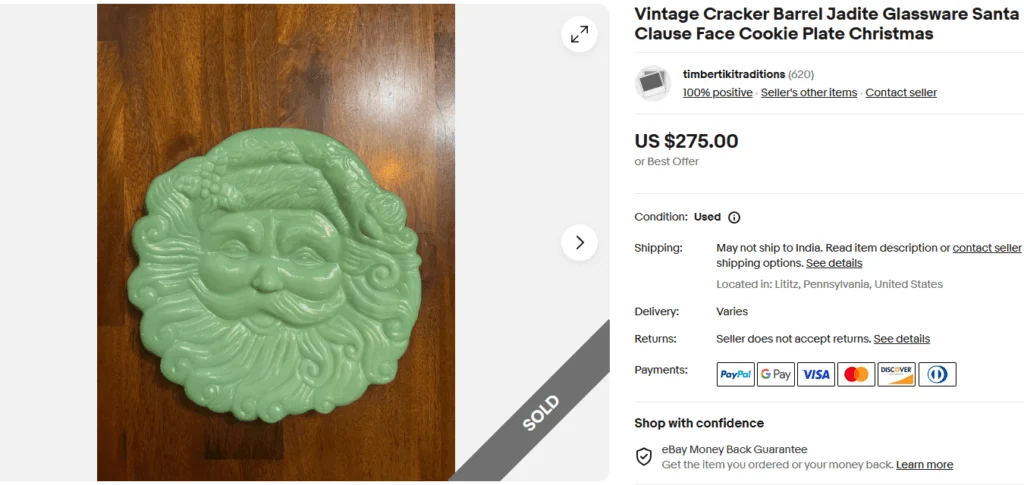
If you’ve got any mixing bowls, mugs, or canisters in that soft green color, take a closer look. A big reason jadeite became so popular again is thanks to Martha Stewart, who’s a huge fan and collector of it. That sparked a whole new wave of people wanting it.
Here’s a tip: the darker, richer green pieces tend to be worth more than the lighter, paler ones. And basic shapes like mugs are common, but things like mixing bowls or canisters (the kind with lids, used for storing flour or sugar) are harder to find, which makes them worth more.
To check if yours is the real deal, flip it over and look for “Fire-King” or “McKee” stamped on the bottom. Regular mugs and bowls usually sell for around $15 to $40, but rare shapes or colors can go for hundreds.
Read Also: 13 Nostalgic Foods We Didn’t Know Were Actually Frugal Growing Up
5. Vintage Tupperware
Yes, really — old Tupperware can be worth money. I know it sounds funny since you can still buy Tupperware new today, but the old stuff, especially certain colors and styles, has become surprisingly collectible.
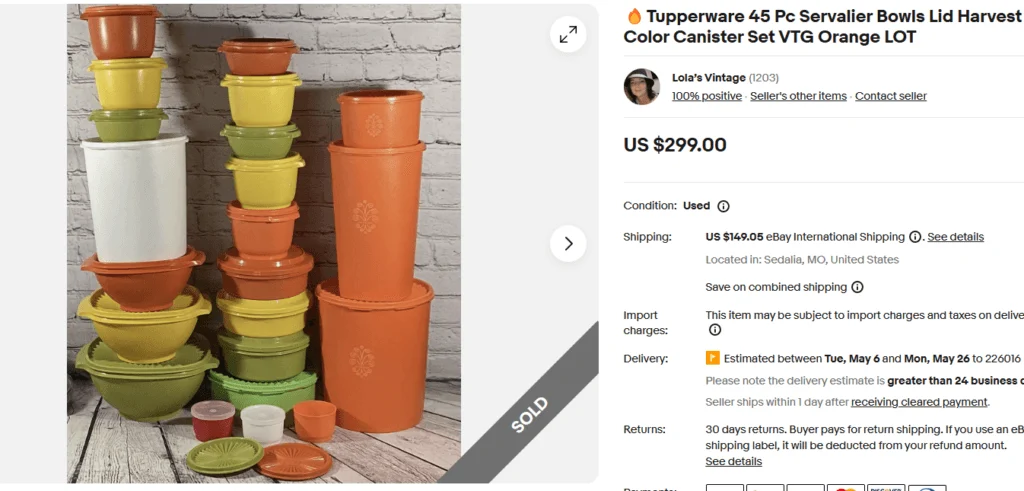
The most valuable pieces are usually ones in colors that Tupperware doesn’t make anymore. Think soft pastel colors, or a specific line called “Harvest” (warm orange and brown tones) or “Avocado” (a green color that was everywhere in the 70s). If your container is a color you don’t see in stores today, that’s a good sign.
Complete sets matter a lot here too. A container with its matching lid is worth more than just a lone piece. And if you’ve got a whole set that still matches, even better.
Want to know exactly what you have? Flip the piece over and look at the bottom. Tupperware stamped little numbers and codes into the plastic, which tell you the pattern and roughly when it was made. Single pieces might not sell for much, but complete sets in rare colors can add up to real money.
6. Old Mason Jars
Mason jars are everywhere these days, used for everything from storing leftovers to holding flowers. But some old ones are actually worth hanging onto, instead of just tossing in the donation box.
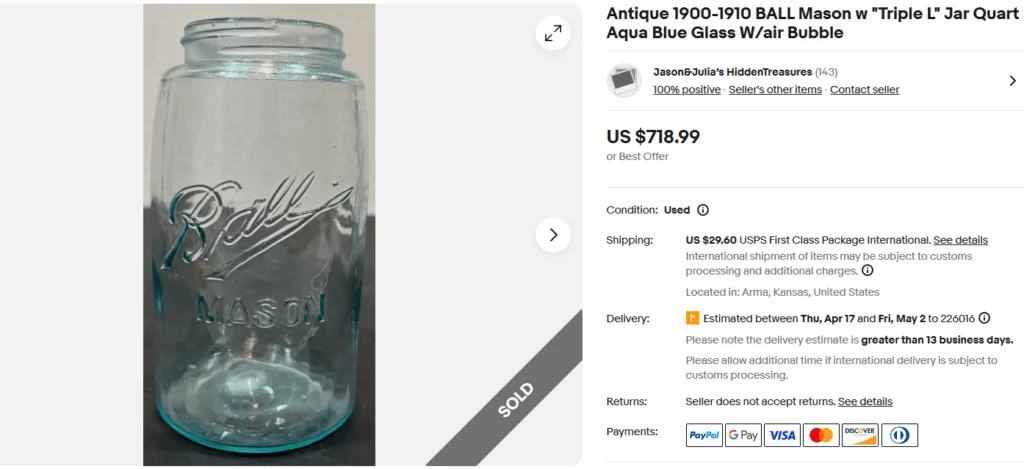
Color is a big deal here. Most old mason jars are a pale blue or green color, kind of like sea glass. Those are common, so they don’t sell for much. But if you’ve got one in an unusual color, like amber (a brownish color) or cobalt (a deep blue), that’s much rarer and worth more.
Brand names matter too. Look closely at the glass itself, since a lot of old jars have words pressed right into them, not printed on a label. Names like Ball, Atlas, or “Mason’s Patent” are worth checking for.
Here’s a neat trick for figuring out if a jar is actually old: look closely at the glass. Really old jars often have little bubbles trapped inside, or the glass looks slightly wavy instead of perfectly smooth. That’s a sign it was made a long time ago, before glass-making got more advanced. Most plain jars are only worth a couple bucks, but rare colors or ones with mistakes in them (like a misprint) can sell for a lot more.
7. Vintage Silverware
Got a drawer full of old forks, knives, and spoons from a relative? Before you keep using them like normal silverware, it’s worth checking what they’re actually made of.
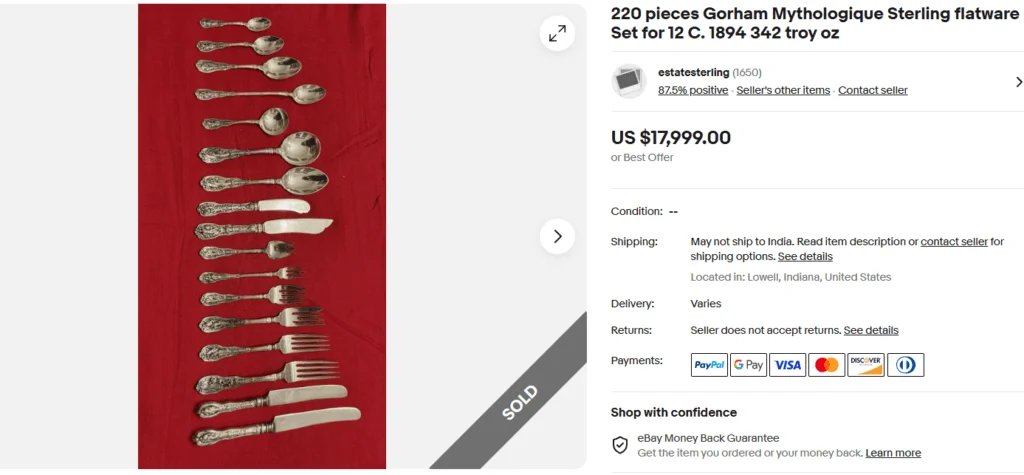
There’s a big difference between “sterling silver” and “silver-plate,” and it changes the value a lot. Sterling silver is solid silver all the way through. Silver-plate is just a thin layer of silver coated over another metal, like copper. Sterling is worth way more, especially because of the actual silver in it.
Here’s how to tell them apart: flip a piece over and look for tiny stamped words or numbers. If it says “sterling” or “925,” that means it’s the real deal. If it just has a brand name, or letters like “EPNS,” that means it’s silver-plate.
For sterling silver, the heavier the piece, the more it’s worth, since it’s basically priced by how much actual silver is in it. Having a full matching set also helps a lot, more than just a spoon or two. Silver-plate pieces are usually only worth a small amount, but sterling silver sets can add up to serious money, depending on the maker and the pattern.
8. Vintage Cookie Jars
If you’ve got a big ceramic jar sitting on the counter shaped like an animal, a cartoon character, or some cute little house, you might be sitting on something collectors would love to get their hands on.
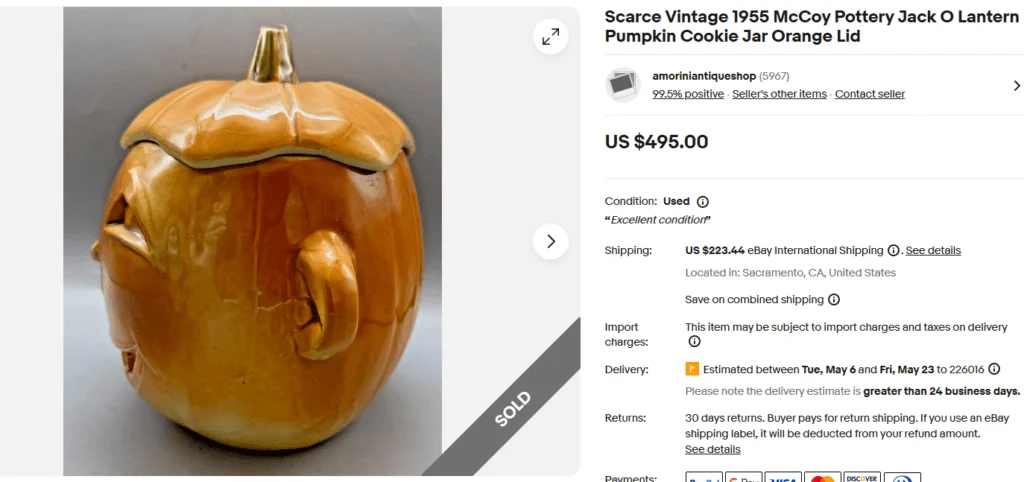
Certain companies made cookie jars that people collect today, like McCoy, Hull, Brush, and Red Wing. The cuter or more unusual the shape, the more people tend to want it. A plain round jar isn’t nearly as exciting to collectors as one shaped like a pig, a clown, or a little house.
The lid is the tricky part here. It’s usually the first thing to crack or chip, since it gets lifted on and off all the time. A jar in great shape, lid and all, is worth a lot more than one with a chipped or missing lid.
To check who made yours, look on the bottom for a stamped maker’s mark. Also run your finger gently around the rim of the lid to feel for any small cracks. Basic cookie jars usually go for $20 to $60, but rare character jars in great condition can sell for a lot more than that.
Read Also: 12 Things My Mother Did at Home That Seemed Completely Normal in the 1950s
9. Vintage Soda Bottles
Old glass soda bottles might not seem like much, just something you’d toss in the recycling bin. But some of them are actually pretty collectible, especially if they’re from a small, local soda brand that doesn’t exist anymore.
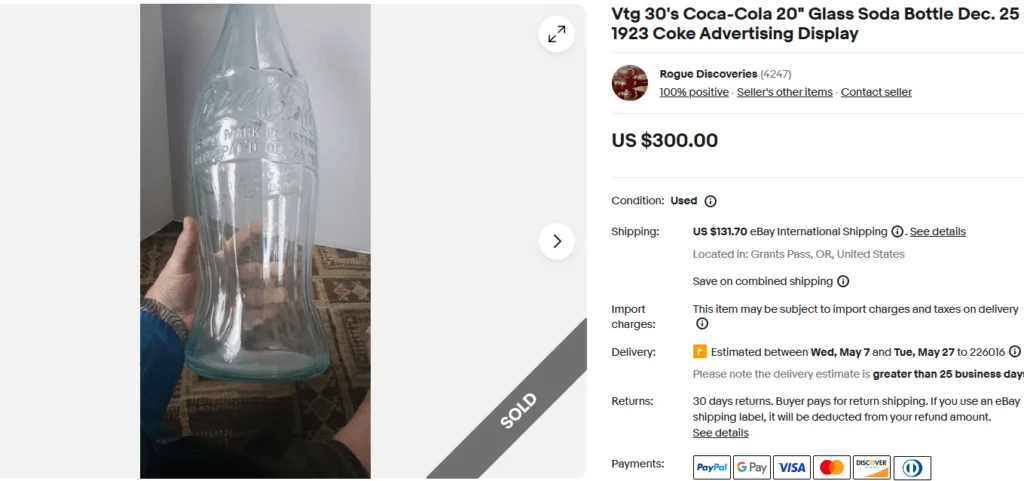
Here’s the key thing to look for: the brand name should be pressed right into the glass, not just printed on a paper label. That’s called “embossing,” and it’s a sign the bottle is older, usually from before the 1960s. A lot of these old bottles also have the city and state stamped on them, since sodas used to be bottled locally instead of by one giant company.
Color matters too. Most old bottles are clear or light green, which is pretty common. But unusual colors are rarer and worth more.
If you find a bottle with the name of a soda brand you’ve never heard of, especially with a town name on it, it’s worth looking up. Common bottles might only be worth a couple dollars, but rare regional brands can sell for quite a bit more.
10. Vintage Egg Beaters
Before electric mixers were a thing, people used hand-crank egg beaters to whip up eggs and batter. If you’ve got an old one sitting in a kitchen drawer, it might be worth more than you’d expect for something so simple.
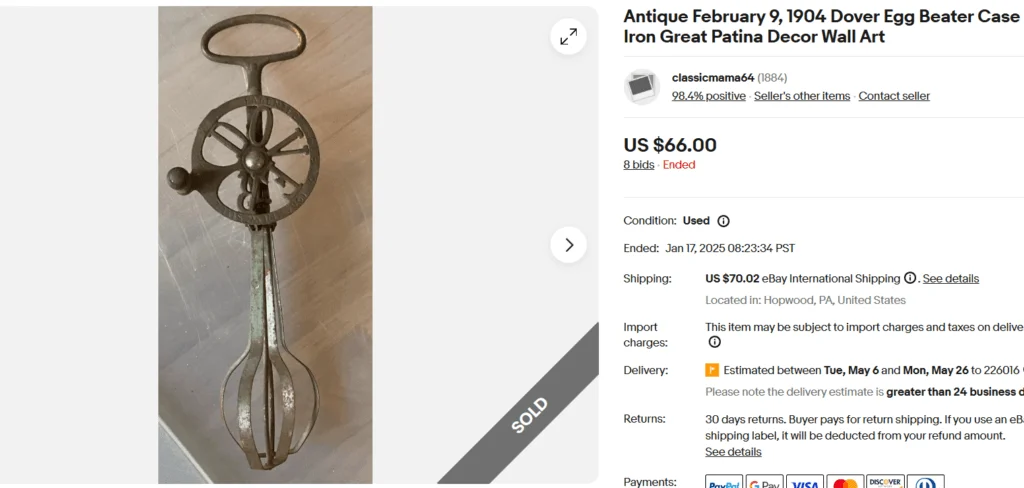
Certain brands are the ones to watch for, like Dover, A&J, and Taplin. Some old egg beaters also have unusual gear designs, since inventors were still experimenting with the best way to make them work. Those unusual mechanisms tend to catch collectors’ eyes.
A few things bump up the value. First, does it still work? Turn the handle and see if the gears spin the beaters smoothly. Second, does it still have its original paint or little decal designs on it? And third, wooden handles are a nice bonus, since a lot of newer versions switched to plastic.
Check the metal for a stamped patent date. It’s a small detail, but it can help you figure out how old the beater really is. Most old egg beaters sell for around $10 to $40, but early models with unusual designs can go for more.
11. Collectible Tea Sets
If you’ve got a full tea set tucked away in a cabinet, maybe one that belonged to a grandmother or was a wedding gift, it might be worth pulling out and actually looking at closely.
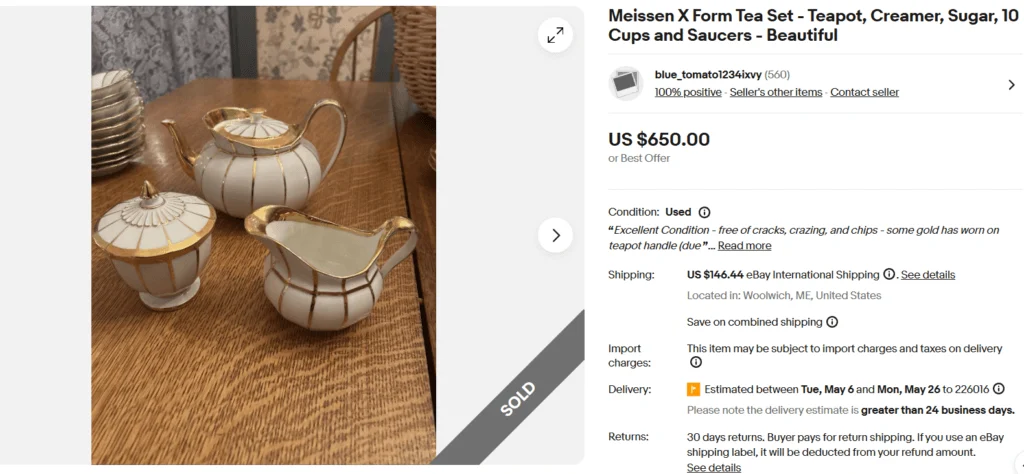
The maker matters a lot here. Names like Noritake, Haviland, and different types of English bone china are ones collectors specifically search for. Sets that are hand-painted, instead of machine-printed, tend to be worth more too, since that took real time and skill to make.
Completeness is a big factor. A full set (that means the teapot, cups, saucers, plus the little creamer and sugar bowl) is worth a lot more than just a teapot by itself or a couple of stray cups.
To find out who made yours, flip each piece over and look at the bottom. You’re looking for something called a “backstamp,” basically a little printed mark that tells you the maker’s name and sometimes the country it came from. Prices really vary here. Some simple sets sell for maybe $30 to $50, but sets from well-known makers, especially complete ones, can go for a whole lot more.
12. Vintage Corningware
That white dish with the little blue cornflower design on it? The one that shows up in basically every grandma’s kitchen? Yeah, that’s Corningware, and some versions of it are worth real money.
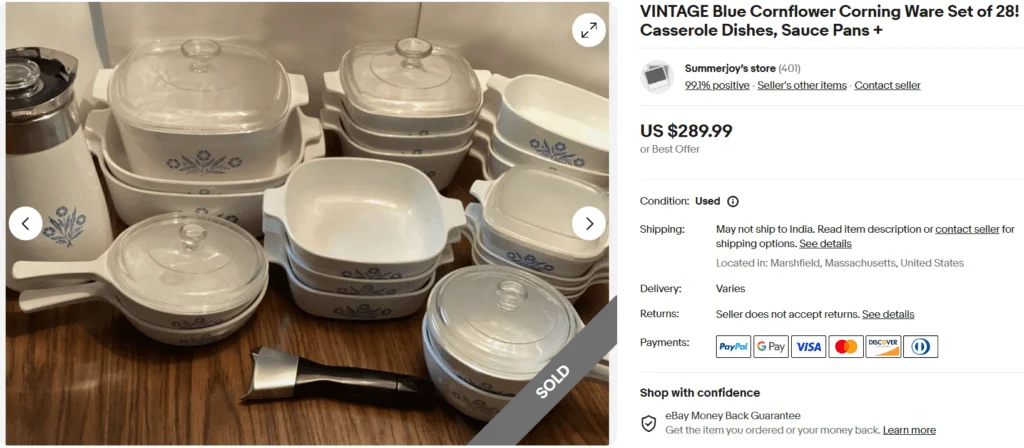
Here’s the thing: Corningware made tons of different patterns over the years, and some got discontinued a long time ago. Patterns like “Spice O’ Life” (with little fruits and veggies on it) or the very early versions of the Blue Cornflower design are the ones collectors want most. If yours has a pattern you don’t recognize from stores today, that’s actually a good sign.
Having the original box or the matching glass lid also helps the value, since a lot of these get separated from their lids over the years.
To figure out roughly how old yours is, look closely at the print quality of the pattern and check the little maker’s stamp on the bottom. Older stamps look different from newer ones. Common Corningware pieces don’t sell for a ton, but rare patterns or early versions can be worth a good bit more.
13. Vintage Kitchen Scales
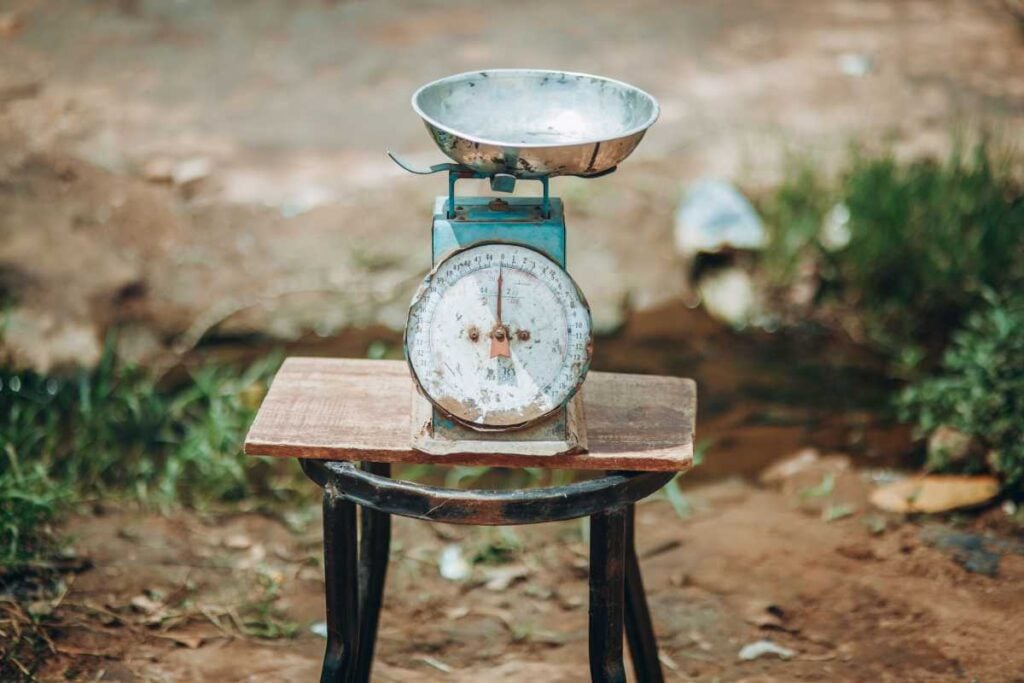
Remember those old scales people used to weigh food on before everything had a digital screen? The ones with a big round dial on top and maybe a little metal tray or bowl? If you’ve got one of those tucked away, it might be worth a look.
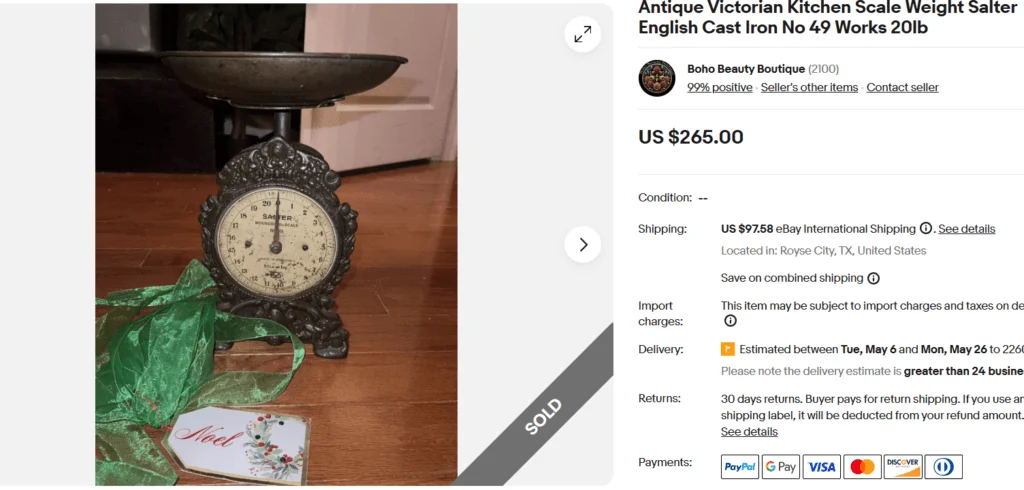
Brands like Hanson, Chatillon, and Detecto are the names collectors tend to search for. A lot of it comes down to how good of shape the scale is in. Does the paint or enamel coating still look nice, or is it chipped and rusty? Does it still have its original tray or weights? And here’s the big one: does it actually still work right, meaning it gives an accurate reading when you weigh something?
To check, take a peek at the spring mechanism inside (if you can see it) for rust, and make sure the numbers on the dial are still easy to read and haven’t faded away. Most working scales sell for around $20 to $60, but the fancier ones made of brass, or ones with detailed enamel designs still in great shape, can go for more.
Read Also: 12 Things You Only Understand if You Spent Summers at Grandma’s House in the 1970s
14. Vintage Pyrex
Out of everything on this list, Pyrex might be the one people search for the most. Those colorful glass mixing bowls and baking dishes are everywhere in secondhand shops, and some patterns are worth a genuinely surprising amount of money.
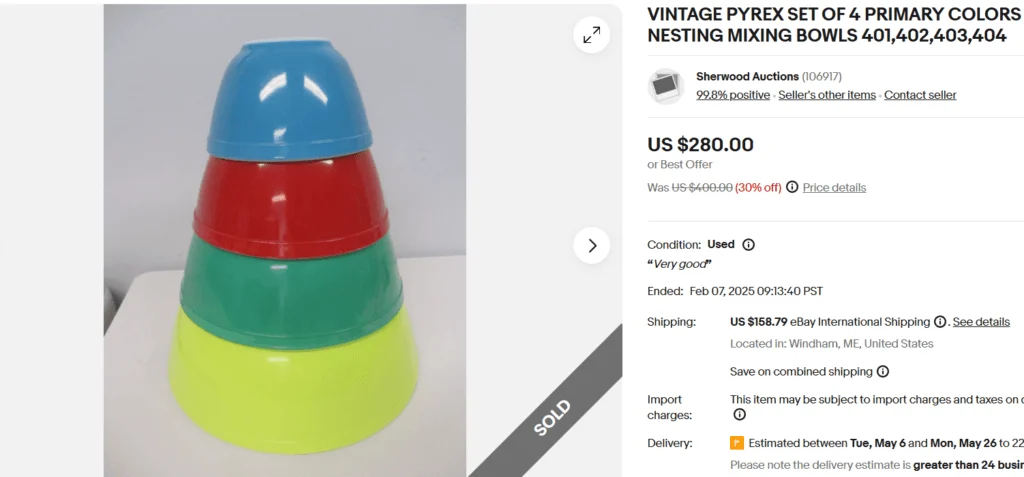
The pattern is what matters most here. Certain designs got discontinued a long time ago and are now hard to find, like “Butterprint” (it has little farm scenes on it), “Pink Daisy,” or “Gooseberry.” If your bowl has a pattern you don’t recognize from stores today, that’s a really good sign. There were also some limited colors made for special promotions, and those tend to be worth even more since so few were made.
Having a full nesting set (meaning the bowls that stack neatly inside each other, from small to large) is worth more than just one random bowl.
Here’s an important tip: flip the piece over and check the bottom for the pattern name and number. Also look closely at how the print looks, since Pyrex has actually made some new versions of old patterns in recent years. Those reissues look similar but aren’t the same as the real vintage ones, and they’re not worth nearly as much. Common Pyrex bowls aren’t worth a huge amount, but rare patterns or colors can sell for way more than you’d expect to find at a regular thrift store.
Conclusion
So, here’s the big takeaway: you don’t need to go treasure hunting in some far-off antique shop. The good stuff might already be sitting in your own house right now, in a cupboard, a garage box, or something you inherited from a relative and never really looked at closely.
A few things to keep in mind before you get too excited (or too disappointed). Age alone doesn’t make something valuable. What really matters is the condition it’s in, whether it’s a complete set or just a lone piece, and how rare it actually is.
Before you decide to sell anything, it’s worth doing a little digging first. Look up “sold” listings (not just asking prices) on sites like eBay, check out collector groups on Facebook, or try an appraisal app to get a better idea of what similar items have actually sold for.
So go ahead, take a look through your kitchen. You might be surprised by what’s been hiding there this whole time.
Note: This article is intended for informational, educational, and entertainment purposes only. Some images are illustrative and may not represent actual brands, products, or related entities. All trademarks, product names, brand logos, packaging, and other intellectual property referenced remain the exclusive property of their respective owners. Any brand mentions or references are provided solely for descriptive and educational context and do not imply any formal or commercial association.