
Close your eyes for a second and picture it: the smell of tuna casserole baking in the oven, or that little crinkly sound of a Hamburger Helper box getting torn open on a random Tuesday night. Feels warm, right? Feels like home.
But here’s the thing — those meals weren’t just “old-school” or “retro.” They were kind of genius, actually. Our parents and grandparents were stretching every dollar they had, using cheap meats, simple starches like pasta and bread, and whatever was already sitting in the pantry. We just thought it was dinner. Turns out, it was a whole money-saving strategy, and we never even noticed.
And with grocery prices still making everyone wince a little at checkout, these “vintage frugal” meals are quietly making a comeback. Makes sense — if it worked back then, it can work now too.
So let’s take a walk down memory lane and break down exactly how these classic, cozy meals were secretly saving our families money the whole time. You’re going to look at your favorite childhood dinner a little differently after this.
Tuna Noodle Casserole
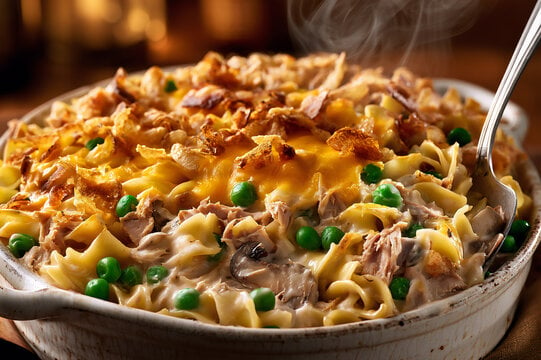
You know the one. Crunchy top, creamy middle, that specific smell that meant dinner was almost ready. It felt like a special homemade dish, right? Here’s the secret: it was actually a genius way to make one tiny can of tuna feed the whole family.
Think about it. A can of tuna is small. Not exactly enough to go around. But mix it with a big bag of cheap egg noodles and a can of cream soup, and suddenly you’ve got a full pan of food. The noodles bulk it up, the creamy soup makes it taste rich, and that crunchy topping (usually crushed crackers or chips) was often just… whatever was already in the pantry. One little can of fish, turned into dinner for five. That’s not a recipe. That’s a magic trick.
Hamburger Helper
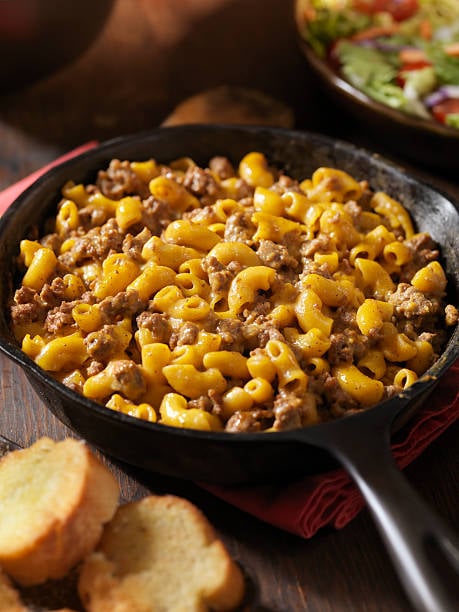
The box with the big glove hand giving you a thumbs up. You’d watch your mom brown some ground beef, dump in a packet of noodles and seasoning, and boom — dinner. It felt easy and kind of exciting, like you were eating something from a commercial.
Here’s the real story: this thing was invented specifically because meat got expensive. Back in the 1970s, beef prices jumped up fast, and families were struggling to make it stretch. Hamburger Helper’s whole job was to take just one pound of ground beef — usually barely enough for a family — and turn it into a full meal that could feed four or five people. The noodles and sauce did the heavy lifting so the meat didn’t have to.
SPAM
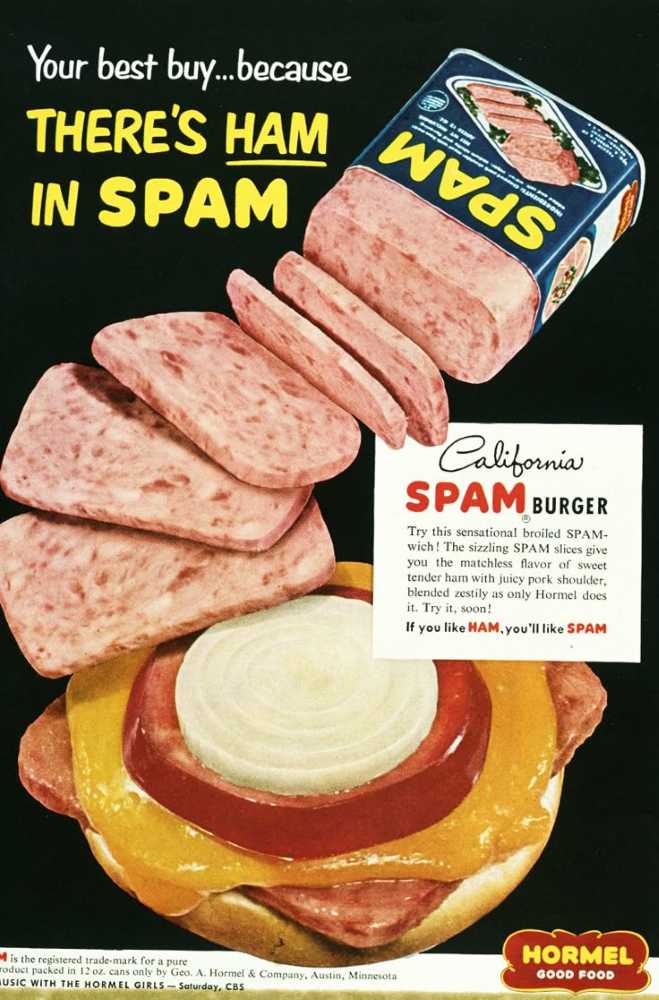
That weird jiggly block that comes out of a can. Maybe your grandpa fried it up for breakfast, or it showed up in a sandwich, and it just seemed like a fun, slightly odd food. But SPAM has a much bigger backstory than “mystery meat in a can.”
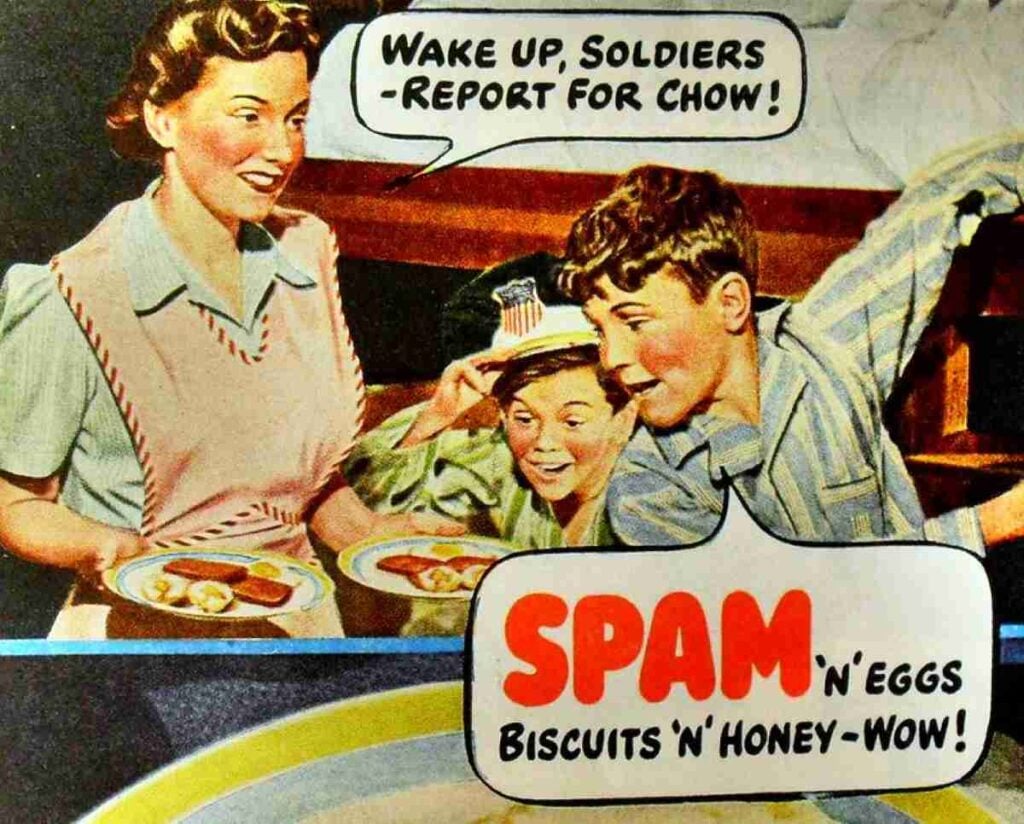
It showed up during World War II, when fresh meat was hard to find and often rationed. SPAM didn’t need a fridge, it didn’t spoil, and it lasted basically forever sitting in a cupboard. That made it way cheaper than buying fresh meat every week, and a lot more reliable too. So while it might seem like a goofy, random food now, it was actually a smart way for families to always have some kind of meat on hand — even when money (or meat at the store) was tight.
Read Also: Check Your Attic: 14 Antique Household Items Worth a Fortune Today
Instant Ramen (Dressed Up With Egg, Veggies, Hot Dogs)
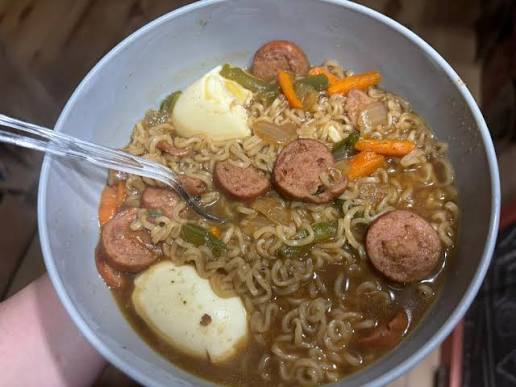
That little brick of noodles with the seasoning packet. Maybe you’d crack an egg into it, or your mom would toss in some frozen peas and a sliced-up hot dog to make it feel like a “real” meal. It felt like your own little kitchen creation, right?
Here’s the thing though — that noodle brick cost basically nothing. Like, pennies. The seasoning packet did all the flavor work, so all you had to do was add whatever was already sitting in the fridge to make it feel bigger and more filling. An egg for protein, some veggies for color, a hot dog because kids love hot dogs. It wasn’t a “recipe” so much as a way to stretch a 25-cent packet of noodles into an actual dinner. Smart, not fancy.
American Chop Suey / Goulash
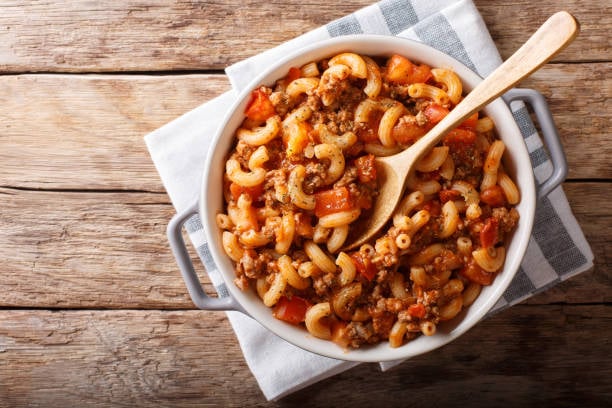
If you grew up in New England, you know this one by heart: ground beef, pasta, and tomato sauce, all mixed together in one big pot. Maybe your family called it goulash instead — same idea, different name depending on where you’re from. Either way, it was that reliable, no-fuss dinner that showed up on busy weeknights.
The trick here is pretty simple once you think about it: meat is expensive, pasta is cheap. So instead of making a meal that’s mostly meat, you make a meal that’s mostly pasta, with just enough ground beef mixed in to give it that hearty, meaty flavor. Throw in a can of tomatoes and some onion, and you’ve got a pot that can feed a whole family for way less than if meat was the star of the show.
Chipped Beef on Toast (“SOS”)
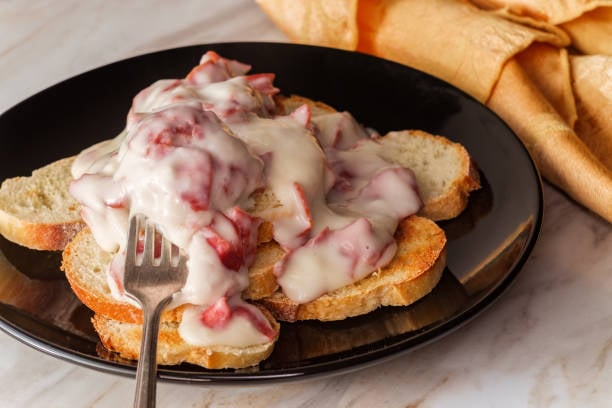
Thin, salty little slices of dried beef, mixed into a creamy white gravy, and poured over toast. If your family called it something silly like “SOS,” you probably didn’t think twice about where it came from — it was just breakfast (or sometimes dinner).
Turns out, this one has military roots. It was a classic mess-hall meal for soldiers because dried beef doesn’t need a fridge and lasts a long time, plus it makes a little bit of meat go a really long way once it’s mixed into gravy. When soldiers came home, a lot of them kept making it for their own families, since it was cheap, filling, and didn’t take much effort. A few slices of dried beef, some milk and flour for the gravy, and bread you probably already had — that’s a whole meal for almost nothing.
Kool-Aid
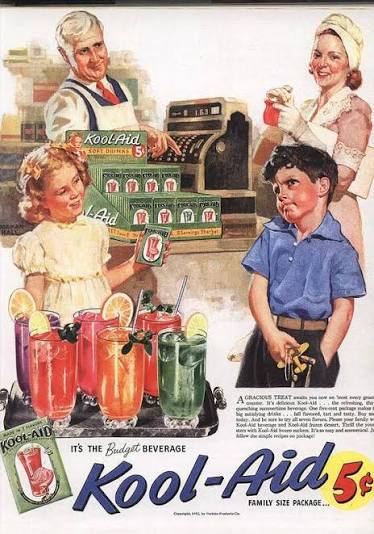
That bright red (or blue, or purple) drink that turned your tongue a weird color. It felt like a treat every time, especially if you got to be the one pouring the sugar packet in and stirring it up yourself. Total childhood highlight.
But here’s the money side of it: a little packet of Kool-Aid cost next to nothing, and all you had to add was water and sugar you already had at home. Compare that to buying juice or soda at the store every week for a big family — that adds up fast. One tiny packet could make a whole pitcher, which meant everyone could have seconds (or thirds) without anyone worrying about the cost. It wasn’t just a fun drink. It was the budget-friendly answer to “can we have juice?”
Read Also: 12 Things My Mother Did at Home That Seemed Completely Normal in the 1950s
Government Cheese / Velveeta Grilled Cheese
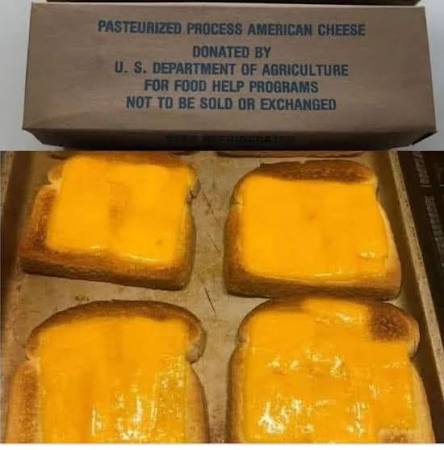
That bright orange, super-melty cheese that never seemed to come from a normal cheese aisle? There’s a reason for that. Some families actually got blocks of cheese through government programs designed to help people afford food. Other families just bought it themselves, because it was cheaper than regular block cheese and lasted way longer in the fridge without going bad.
Either way, it turned into one of the easiest, most comforting dinners ever: the grilled cheese sandwich. Melty, gooey, and ready in like five minutes. It felt like a treat, but really, it was one of the cheapest meals you could possibly make — just bread, butter, and cheese that stretched further than the “fancy” stuff.
Meatloaf
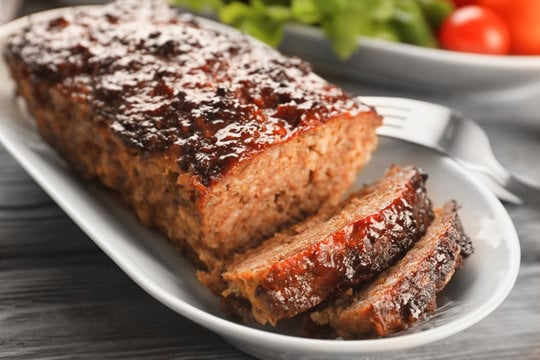
The loaf-shaped dinner that always seemed to show up on a random weeknight, then somehow show up again the next day as a sandwich. It felt like a classic “mom meal,” the kind of thing that seemed like it took a lot of work.
Here’s the clever part, though: meatloaf isn’t actually mostly meat. It’s ground beef mixed with stuff like bread crumbs, oats, or crushed-up crackers — cheap ingredients that soak up flavor and add bulk without costing much. That meant a small amount of meat could turn into a big loaf, easily enough to feed everyone at dinner. And since it was baked in a loaf shape, slicing up the leftovers for sandwiches the next day was just… built in. One pound of meat, stretched into two meals. That’s some serious meal-planning skill, even if nobody called it that at the time.
Sloppy Joes
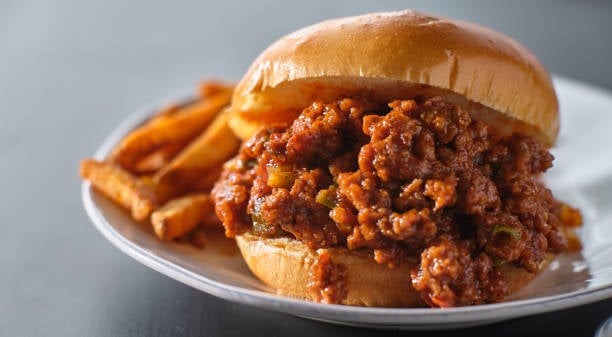
Messy, saucy, kind of fun to eat with your hands — Sloppy Joes always felt like a treat night. Ground beef mixed with a sweet, tangy sauce, piled onto a bun. What’s not to love?
But just like meatloaf, the trick here is that it’s not really a “beef” meal — it’s a “sauce” meal with some beef in it. Mixing the ground beef with ketchup or tomato sauce meant you needed way less meat to fill everyone up, since the sauce does a lot of the work. And here’s a detail you might not have noticed: a lot of families served it over regular sliced bread instead of hamburger buns. Buns cost more than a loaf of sandwich bread, so swapping them out saved even more money without anyone really caring. It was still messy, still fun, still delicious — just secretly cheap too.
Biscuits and Gravy
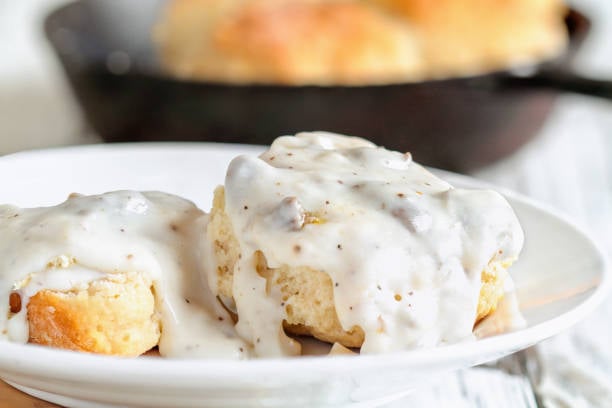
Warm, soft biscuits smothered in thick white gravy. It feels like such a hearty, filling breakfast, like there’s a lot going on in that dish. But here’s the surprising part: there’s barely any meat in it at all.
That gravy is mostly just flour and milk (or water), cooked with the little bits of fat and flavor left in the pan after cooking sausage or bacon. So instead of needing a big pile of meat to make everyone feel full, you just need a little bit to flavor the gravy, and then flour and milk do the rest. Pour it over cheap biscuits, and you’ve got a breakfast that feels rich and filling but costs almost nothing to make. Basically, it’s a “meat meal” that tricks your brain into thinking there’s way more meat than there actually is.
Breakfast for Dinner (Eggs, Pancakes, French Toast)
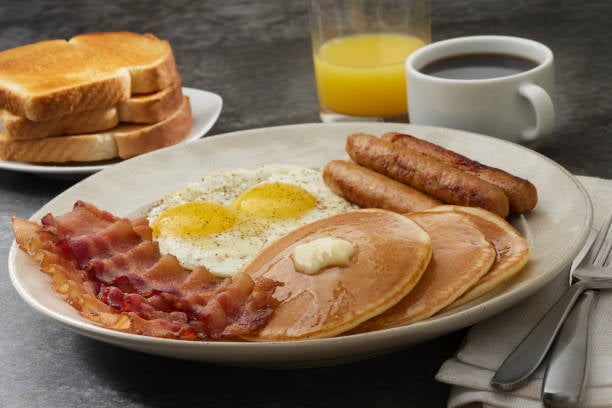
Breakfast for dinner always felt like a fun little surprise, right? Like your family was breaking the rules a bit. Pancakes at 6pm? French toast on a Tuesday? It felt playful and special.
But honestly, it wasn’t just about having fun — it was a smart money move. Eggs and flour are way cheaper than meat, so a dinner built around eggs, pancakes, or French toast cost a lot less than a dinner built around chicken or beef. Families weren’t just doing it because it was silly and fun (even though it definitely was) — they were doing it because it stretched the grocery budget further while still feeling like a full, warm meal. Turns out “breakfast for dinner” wasn’t just a treat. It was a tiny budget hack disguised as a fun night.
Read Also: 14 Vintage Kitchen Items You Might Already Have at Home That Collectors Are Paying Big Money For
Grilled Cheese and Tomato Soup
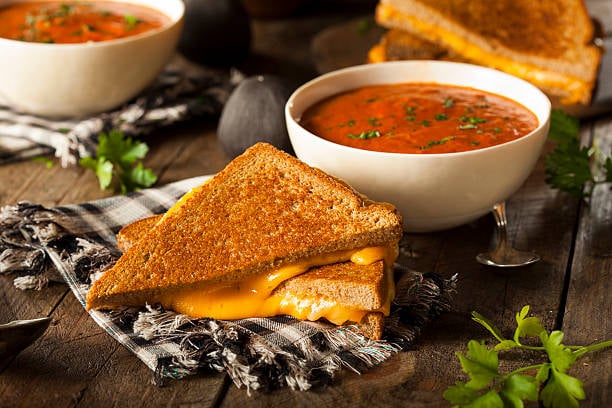
Is there a more classic combo? Crispy, buttery grilled cheese dunked into a warm bowl of tomato soup. It’s the kind of meal that just feels like a hug. Rainy day, sick day, lazy Sunday — this one always showed up.
And honestly, it might be the cheapest hot meal on this whole list. Bread, butter, cheese, and a can of tomato soup — that’s it. No meat needed at all. Everything on that ingredient list is stuff that lasts a while and doesn’t cost much, which meant it was the easy go-to whenever money was tight or the fridge was looking a little empty. It felt cozy and comforting, but really, it was just four cheap ingredients doing a whole lot of work.
So… Were We Just Broke and Happy?
Here’s the fun twist in all of this: the meals we remember as “comfort food” or “mom’s specialty” weren’t really about fancy cooking skills. They were about making a little bit of food go a long way — and doing it so well that nobody even noticed.
And maybe that’s exactly why these dishes stuck around. They weren’t loved even though they were cheap. They were loved partly because they were cheap — made so often that they turned into tradition, into “that’s just what we eat,” into the meals that feel like home.
So next time grocery prices have you stressed, maybe it’s time to bring one of these back. Which one was your family’s go-to? Was it the tuna casserole, the Sloppy Joes, or something totally different we didn’t even mention? Either way, turns out your parents were budgeting geniuses the whole time — they just called it dinner.