
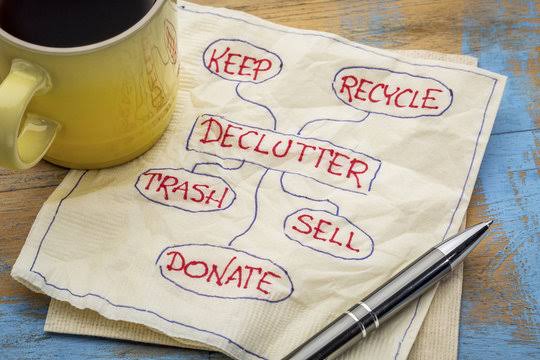
Ever start a declutter project feeling super motivated… and end up more exhausted than when you started? You’re not alone. Most of the time, that burnout isn’t because you didn’t try hard enough. It’s because you tried to do too much.
Here’s the thing people forget: the whole point of decluttering is to end up with less stuff. Not a perfectly labeled, color-coded, Pinterest-worthy system. Just less stuff.
But somewhere along the way, decluttering turned into this whole production. We add extra steps that feel productive but don’t actually help us get rid of anything. They just eat up your time and energy until you’re too tired to finish.
So let’s talk about 10 of these sneaky time-wasters — the tasks that feel like progress but are really just detours. Skip them, and you’ll get through your declutter way faster (and with way less stress).
1. Buying storage bins and organizers before you declutter
Have you ever walked into a store, seen a cute set of matching bins, and thought “yes, THIS is what will finally get my closet organized”? Same. But here’s the problem: you’re buying storage for stuff you haven’t even decided to keep yet.
Think about it. If you fill a bin with things and then realize half of it should’ve been donated, you just wasted time (and money) organizing junk. You basically built a nice little home for stuff that needed to leave your house in the first place.
The better move? Declutter first. Go through everything, decide what’s actually staying, and then figure out what kind of storage you need. You might even find you already own enough bins and boxes once the unnecessary stuff is gone. Less guessing, less waste, less clutter on top of clutter.
2. Digitizing or scanning every paper and photo
This one feels responsible, right? Like you’re being extra careful by scanning every old photo, every receipt, every random paper before tossing the original. But let’s be real — are you ever actually going to look at 90% of that stuff again, digital or not?
Scanning takes time. Like, a lot of time. And if you’re doing it for boxes of old papers or hundreds of photos, that “quick project” can eat up entire weekends. Meanwhile, your house is still cluttered because you’re sitting at a scanner instead of actually clearing space.
A better way to handle it: only keep the stuff that actually matters to you. A few meaningful photos, an important document or two — sure, digitize those. But that old grocery list from 2019 or a blurry photo of a parking lot? You can let that go without a digital copy. Not everything needs to be saved forever, even in digital form.
3. Trying to sell every item instead of donating
Nobody wants to just give away stuff that’s “worth something.” So you snap a photo, write a description, post it online, and wait for a buyer. Then you’re messaging back and forth, answering questions, agreeing on a meet-up spot… all for an old lamp that sells for $3.
Multiply that by every single item in your declutter pile, and suddenly you’ve spent your entire weekend running a tiny garage sale instead of actually clearing out your space. That’s a lot of effort for barely any money.
Here’s a simpler way to think about it: set a value limit before you start. Something like, “If it’s worth more than $20, I’ll try to sell it. If it’s less than that, straight to donate.” This way, you’re not wasting hours haggling over pocket change. The bigger-ticket stuff still gets sold, but the little stuff moves out the door fast.
4. Deep-cleaning items before deciding keep/toss
You pick up an old mug, and before you even decide if you’re keeping it, you’re scrubbing it, drying it, and setting it aside all shiny and clean. Feels productive, right? Except… what if you were going to donate that mug anyway?
This happens more than you’d think. We clean stuff out of habit, not because it actually needs to be clean right now. But if that item is leaving your house in an hour anyway, all that scrubbing was for nothing. You just spent energy making something look nice that you’re about to give away.
The fix is simple: decide first, clean second. Sort everything into keep, donate, or trash before you touch a sponge. Once you know what’s actually staying in your home, that’s when cleaning makes sense. Otherwise, you’re just polishing stuff you’re about to say goodbye to.
5. Creating elaborate labeling or filing systems upfront
This one’s sneaky because it feels like “getting organized.” You start making cute labels, color-coded folders, or a super detailed system for a category of stuff… before you’ve even gone through it. But how do you know what labels you’ll need if you don’t know what you’re keeping yet?
It’s like designing the perfect closet organizer for clothes you haven’t even tried on. You might spend an hour making labels for categories that end up empty, or totally miss ones you actually need. That’s time you could’ve spent just sorting the stuff.
A much easier way to do this: start with three simple piles or bins — keep, donate, and trash. That’s it. No labels, no fancy folders, nothing complicated. Once everything’s sorted and you know what you’re actually keeping, then you can get fancy with labels or a filing system if you still want one. Simple first, fancy later (if at all).
Read Also: Where to Start When You Have Too Much Stuff in Your Home: 4 Simple Steps
6. Reading endless declutter guides/methods instead of starting
You know that feeling when you’re “preparing” to start a project, but really you’re just watching video after video about how other people do it? Yeah, that’s this one. You tell yourself you’re learning the best method, but really, you’re just putting off the actual work.
Here’s the truth: no amount of research is going to declutter your closet for you. You could read 50 articles about the “perfect” system, but until you actually open that drawer and start pulling things out, nothing changes. All that reading starts to feel like progress, but it’s really just a comfy way to avoid doing the real thing.
So here’s the better move: pick one simple method (any method — they mostly work the same way) and just start. Set a timer for 15 minutes and tackle one drawer or shelf today. You’ll learn way more from actually doing it than from reading about it for the tenth time.
7. Trying to declutter the whole house in one session
This one usually starts with big energy. “I’m doing this WHOLE house today!” You start strong in the closet, move to the kitchen, get halfway through the garage, and by hour six, you’re standing in a pile of stuff with zero energy left to finish anything.
The problem is your brain can only make so many decisions before it gets tired. This is called decision fatigue, and it’s very real. The more choices you make (keep this, toss that, donate this), the harder each decision gets. By the end of a huge session, you’re just shoving things in random spots to be done with it — which means you end up with new piles of clutter instead of less clutter.
A smarter way to go about it: pick one room, or even just one category (like all your shoes, or all your books), and finish that before moving on. Small wins add up fast, and you’ll actually finish things instead of leaving five rooms half-done.
8. Second-guessing and revisiting the same item repeatedly
We’ve all held the same sweater for the fifth time, thinking, “Do I keep this or not?” You put it in the keep pile. Ten minutes later, you move it to maybe. Then you pick it back up again. Sound familiar?
This back-and-forth feels like you’re being thoughtful, but really, it’s just draining your energy on one single item. If you spend five minutes debating a sweater, and you do that for twenty different items, that’s over an hour gone — just from indecision.
Here’s a trick that helps: use a quick rule and stick with it. Something like, “Have I used this in the last year?” or “Do I even know what this is for?” If the answer’s no, it goes. Make the call once, then move on. You don’t need to be 100% sure about every item — you just need to keep moving. The sweater will be fine either way.
9. Taking sentimental photos of every item before letting it go
You don’t want to forget an item, so you snap a photo before it goes in the donate box. Totally makes sense… for a few special things. But when you start photographing every single item — every shirt, every mug, every random knickknack — it turns into its own project.
Think about it: stopping to take a photo, maybe adding a little caption or memory note, for dozens of items? That adds up fast. You’re not decluttering anymore, you’re basically building a museum exhibit. And most of those photos end up sitting in your camera roll, never looked at again anyway.
Here’s a better way to do it: save the photos for the items that actually mean something to you. Your favorite childhood toy? Sure, snap a pic. Grandma’s old scarf? Absolutely. But that random shirt you haven’t worn since 2020? You don’t need a photo to remember that. Pick your top favorites and let the rest go without ceremony.
10. Mixing deep cleaning with decluttering
You’re sorting through a shelf, and suddenly you notice it’s dusty. So you grab a cloth and start wiping it down. Then you notice the floor needs vacuuming. Before you know it, you’ve turned a simple decluttering session into a full-blown cleaning day.
Here’s the thing — cleaning and decluttering are two totally different jobs. Decluttering is about deciding what stays and what goes. Cleaning is about making things look nice. When you mix them together, you end up doing twice the work in half the time you actually have, and neither job gets done well. Plus, you’re literally scrubbing shelves that might be empty in ten minutes anyway.
The fix? Keep the two separate. First, sort everything and remove what’s leaving. Then, once the clutter is gone, go back and clean the space if it needs it. You’ll get through your declutter way faster, and cleaning an empty shelf takes way less time than cleaning one that’s still full of stuff.
Conclusion
At the end of the day, decluttering doesn’t have to be some huge, perfect process. It just has to work. The real goal is simple: less stuff, more space, less stress.
All ten of these traps have one thing in common — they feel productive, but they actually slow you down. Buying bins too early, scanning every photo, selling $3 items, cleaning things you’re about to give away… none of it moves you closer to a decluttered home. It just delays it.
So here’s your takeaway: skip the extra steps. Make quick decisions, keep it simple, and save the deep cleaning and fancy organizing for after the clutter is gone.
Want an easy way to start? Pick one room this week. Just one. And remember the rule: decide first, organize and clean later. You’ll be amazed how much faster things go when you stop overcomplicating it.
Read Also: If You Want to Be Happier After 60, Remove These 5 Harmful Things From Your Home