

Once you hit 60, something shifts. You’re not rushing off to work every morning or running kids to soccer practice anymore. Home isn’t just a place you crash at the end of a busy day — it’s where you actually live now. You spend real hours there. You notice things.
And here’s the thing nobody tells you: the stuff sitting around your house isn’t just taking up space. It’s quietly messing with how you feel. That drawer you can’t open all the way. The chair with the broken leg you’ve been “meaning to fix.” The gift from your cousin that you keep out of guilt, not love. None of it seems like a big deal on its own. But add it all up, and it’s like carrying a backpack full of little rocks — you don’t notice the weight until you set it down.
The good news? You don’t need to buy anything or add anything to feel better. Sometimes happiness is just about clearing stuff out. Below are five things that tend to sneak into homes over the years — and why letting them go might be one of the simplest ways to feel lighter, calmer, and genuinely happier.
1. Clutter and Unused Belongings
Let’s start with the big one: stuff. Just… stuff. The kind that piles up over decades without you really noticing.
Think about it. You’ve probably lived in your home for years, maybe even raised a family there. That means you’ve got old furniture, boxes in the garage, clothes you haven’t worn since the Clinton administration, and drawers stuffed with things you forgot you even owned. None of it feels like a problem day to day. But here’s what’s actually happening: every time you walk past a cluttered room, your brain quietly registers it. It’s like background noise you stop hearing but your body still feels.
Doctors and researchers have actually studied this. When you’re surrounded by clutter, your brain has to work harder just to process everything it sees. That adds up to more stress and makes it harder to relax, even in your own living room. And if you’re in a smaller space now — maybe you downsized — clutter can make a cozy home feel like a cramped one.
There’s also an emotional side to this that hits differently after 60. A lot of the stuff we’re talking about isn’t just “stuff.” It’s your kids’ old artwork. It’s your mother’s china. It’s the sweater your late husband used to wear. Letting go of things like that can feel like letting go of a piece of your life, and that’s a real feeling worth taking seriously.
But here’s the truth: keeping every single item doesn’t keep the memory alive. You get to keep the memory either way. And on the practical side, piles of boxes and clutter on the floor are also just… dangerous. Tripping is one of the most common reasons people end up in the hospital as they get older, and clutter is often the culprit.
So where do you start? Don’t try to clean out your whole house in one weekend — that’s a fast way to burn out and quit. Instead, pick one drawer. Or one shelf. Or one small corner of one room. Go through it and sort everything into three simple piles: keep it, donate it, or toss it. That’s it. No complicated system needed.
Once that one drawer is done, you’re done for the day. Celebrate that. Then come back to another spot next week. Small wins add up, and before you know it, your home will feel lighter — and so will you.
2. Expired Medications and Outdated Health Items
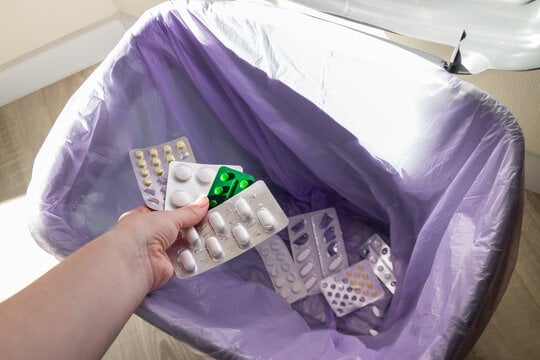
Open up your medicine cabinet right now. Go ahead, actually think about it. Is it neat and organized… or is it a jumble of pill bottles, half-used tubes, and stuff you can’t even remember buying?
For most people over 60, it’s the second one. And that’s completely normal — you’ve probably been to more doctor visits over the years, tried more medications, and picked up more prescriptions than you did in your 20s and 30s. But all of that adds up to a cabinet full of old pill bottles, expired supplements, and medications you don’t even take anymore.
Here’s why that’s a bigger deal than it seems. First, there’s a real safety issue. When bottles pile up, it’s easy to grab the wrong one, especially if you’re tired, in a hurry, or the labels have faded. Taking an expired medication, or worse, mixing up two similar-looking bottles, can actually cause harm. This isn’t about being careless — it happens to careful people too. It’s just math: more bottles means more chances for a mix-up.
Second, there’s a mental side to this that’s easy to overlook. A messy, overstuffed medicine cabinet creates this quiet, nagging feeling every time you open it. You might not even notice it consciously, but somewhere in the back of your mind, disorganized health stuff feels like unfinished business. It’s hard to feel calm and in control when your medicine cabinet feels like a mystery box.
Here’s the good news: this one is actually easy to fix.
Once a year — maybe pick a date you’ll remember, like New Year’s or your birthday — go through everything in that cabinet. Check expiration dates. If a medication is expired, or if it’s for a health issue you no longer have, it’s time to let it go.
But don’t just toss pills in the trash or flush them down the toilet. Most pharmacies have a safe medication take-back program, and many police stations do too. It only takes a few minutes to drop them off, and it keeps old medications out of the wrong hands.
For everything you keep, use a marker or some sticky labels to make sure bottles are clearly marked with what they are and when they need to be used by. A clear, organized medicine cabinet doesn’t just keep you safer — it gives you one less thing to worry about every single day.
3. Broken or “Waiting to Be Fixed” Items
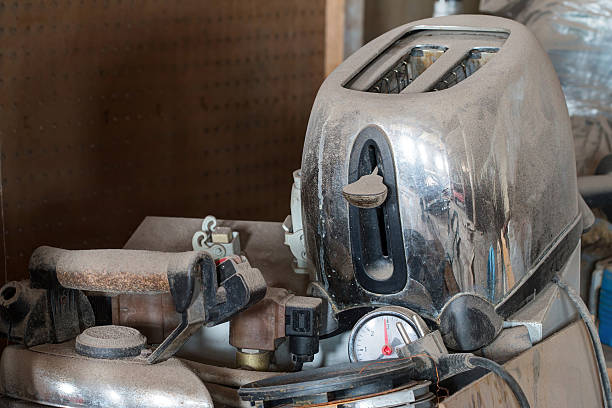
We all have one. Maybe it’s a lamp in the corner that flickers but doesn’t turn on right. Or an old toaster that’s “probably an easy fix.” Or a chair with a wobbly leg that’s been wobbly for… honestly, you can’t even remember how long.
These items usually don’t bother us on purpose. We tell ourselves we’ll get to them eventually. But here’s the thing: every time you walk past that broken lamp or that wobbly chair, some small part of your brain notices it. And it whispers the same little message every single time: “That’s still not fixed.”
It sounds small. But small things like this add up fast. Psychologists call this kind of thing an “open loop” — it’s an unfinished task your brain doesn’t like leaving hanging. Your mind doesn’t fully relax around unfinished business, even when it’s something as minor as a broken lamp. Multiply that by five or six broken things scattered around your house, and you’ve got a steady stream of tiny mental tugs pulling at you all day, every day.
And let’s be honest about something else: a lot of us hang onto broken stuff for “just in case” reasons. Old electronics we don’t use anymore but keep “in case we need parts.” Appliances that stopped working years ago but still take up space in a closet. The problem is, “just in case” often turns into “forever,” and that broken stuff just sits there, quietly cluttering both your home and your mind.
Here’s a simple way to deal with this: give everything a deadline.
Look around your house and make a short list of anything that’s broken or waiting to be fixed. For each item, give yourself 30 days. If you fix it in that time, great — it earns its spot back in your home. If the 30 days pass and it’s still broken, it’s time to let it go, whether that means donating it, recycling it, or simply tossing it out.
This isn’t about being harsh with yourself. It’s about being honest. If something’s been broken for two years, the truth is you were probably never going to fix it anyway. Giving yourself a real deadline just makes that decision easier — and once that lamp or chair is finally gone, you’ll likely feel a little lighter every time you walk past that spot.
Read Also: 50 Easy Things Seniors Can Declutter Today for a Simpler, Stress-Free Home
4. Guilt-Inducing Gifts and “Should” Objects
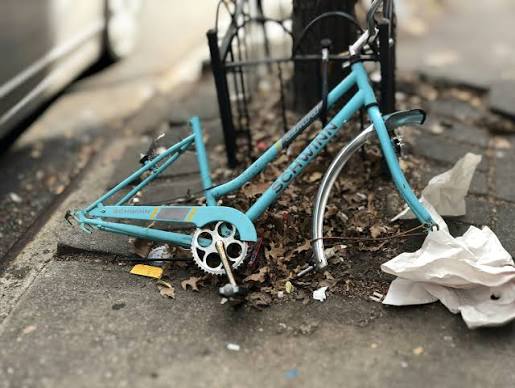
Take a look around your house for things you keep… but don’t actually like. Maybe it’s a vase your sister-in-law gave you that’s just not your style. Or that exercise bike you bought two years ago, promising yourself you’d use it every day, and now it just holds laundry. Or a box of craft supplies from a hobby you tried once and never picked up again.
None of these things are broken. None of them are expired. So why do they weigh on you? Because they’re tied to guilt, not joy. Every time you see that vase, you think, “I should like this more.” Every time you walk past that exercise bike, you think, “I should be using this.” You’re not just looking at an object — you’re looking at a tiny reminder that you’re not living up to some expectation, either someone else’s or your own.
That’s exhausting. And it’s also completely unnecessary.
Here’s a reframe that might help: keeping something out of guilt isn’t the same as actually valuing it. If you truly loved that vase, you’d want it displayed somewhere you see it and smile. If you truly used that exercise bike, it wouldn’t be a laundry rack. Holding onto something because you feel like you “should” doesn’t honor the person who gave it to you or the goal you set for yourself. It just quietly drains a little bit of energy from you, day after day.
The same goes for unfinished hobbies. Maybe you started painting, or knitting, or woodworking, and it just didn’t stick. That’s okay! Interests change. Trying something and deciding it’s not for you isn’t a failure — it’s just information. You don’t need to keep the supplies around as a monument to something you’re “supposed to” get back to someday.
So here’s your permission slip: You are allowed to let go of gifts you don’t love. You are allowed to donate things tied to goals you’ve outgrown or abandoned. You don’t need a good excuse. You don’t need to feel guilty about it. And you definitely don’t need to explain yourself to anyone, including the person who gave it to you.
Someone else might actually use that exercise bike or those craft supplies and get real joy out of them. Meanwhile, you get your space back, and more importantly, you get a little peace of mind back too.
5. Heavy Drapery and Poor Lighting
Last one, and it’s easy to miss because it’s not really “clutter” in the normal sense. It’s about light.
Think about your curtains for a second. Are they thick, heavy, dark ones that block out most of the sun? Or do they let light pour in during the day? A lot of homes, especially older ones, end up with heavy drapes that were popular decades ago, or curtains that were originally hung for privacy and just never got swapped out. Add in a plant or two crowding the window, and you might be blocking out way more sunlight than you realize.
Here’s why that matters more than you’d think: your body actually needs natural light to feel good. Sunlight helps control your internal clock, the one that tells you when to feel awake and when to feel sleepy. It also plays a role in your mood. When you don’t get enough natural light during the day, it’s harder to feel alert, and it’s easier to feel low, tired, or just kind of “blah” without knowing why.
This matters even more after 60, simply because a lot of people this age spend more time at home than they used to. If you’re not commuting to work or running around after kids, your house is where you spend most of your daylight hours. That means the amount of light in your home has a much bigger effect on you than it did years ago. A dim, shadowy living room isn’t just uncozy — it can genuinely drag your mood down over time.
The fix here is simple and doesn’t cost much.
Start with your curtains. You don’t need to get rid of them completely if you like having some privacy, but consider swapping heavy, dark fabric for something lighter, like a sheer or a lightweight cotton. This lets sunlight filter through even when they’re closed.
Next, take a look at any plants or furniture blocking your windows. Even trimming back a leafy plant or moving a bookshelf a few inches can let in noticeably more light.
Finally, for darker spaces or cloudy days, add some warm supplemental lighting. Lamps with warm-toned bulbs (not the harsh, bright white kind) can make a room feel cozy and lift the mood, even without sunlight.
Small changes here go a long way. A brighter home often leads to a brighter mood, and that’s about as simple as self-care gets.
Bringing It All Together
Let’s recap what we talked about: clutter, old medications, broken stuff, guilt-gifts, and heavy curtains. On the surface, these seem like five totally different things. But they’re all connected by one simple idea: your home isn’t just a place you live in — it’s something that affects how you feel, every single day.
Every pile of clutter, every expired pill bottle, every broken lamp, every gift you keep out of guilt, every heavy curtain blocking the sun… they all add a tiny bit of weight. None of them are huge on their own. But together, they quietly shape your mood more than you probably realized.
Here’s the good news: you don’t have to fix everything this weekend. In fact, please don’t try. Pick one thing from this list. Just one. Maybe it’s that one messy drawer, or your medicine cabinet, or one broken item that’s been bothering you for way too long. Deal with that one thing, then give yourself credit for it.
This stage of life isn’t about slowing down or having less. It’s a real chance to live lighter, be more intentional, and surround yourself only with things that actually make you happy. Clear out the excess, and make room for something better: more peace, more calm, and yes, more happiness too.
Read Also: Where to Start When You Have Too Much Stuff in Your Home: 4 Simple Steps