
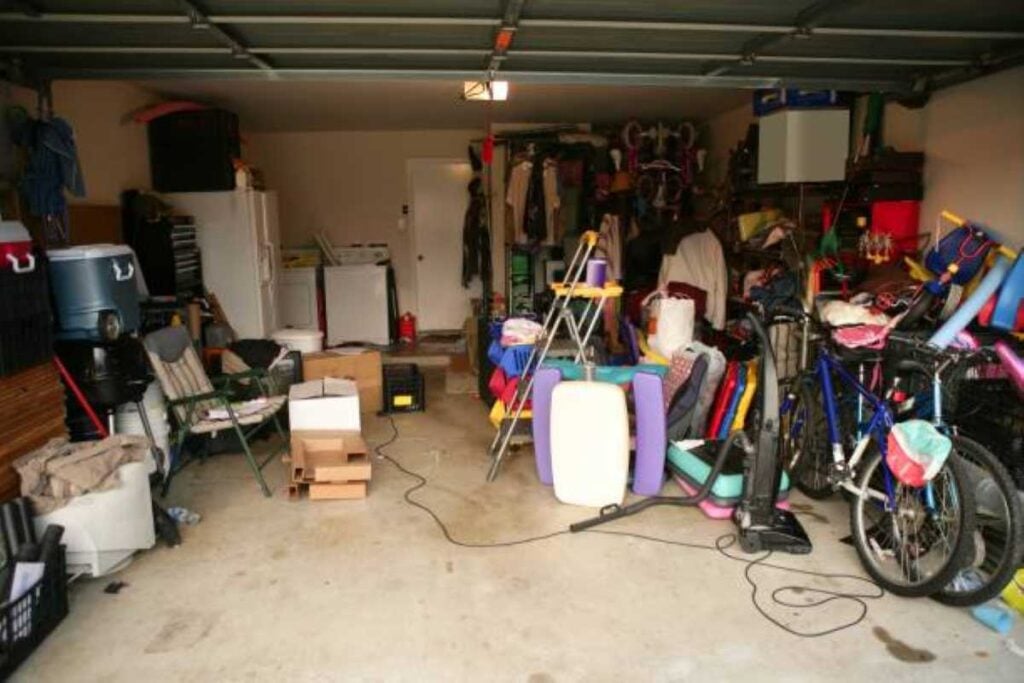
Be honest: when’s the last time you actually parked your car in your garage? For a lot of us, garages turn into this weird black hole where stuff goes in and never comes out. You’ve got half-used paint cans from a project five years ago, tools you can’t find because they’re buried under boxes, and random junk you swear you’ll deal with “someday.”
Here’s the good news: you don’t need a whole weekend to make a dent in this. You can knock out real progress today, in an hour or less, just by clearing out the stuff that’s obviously not doing you any good anymore.
And this isn’t just about having more space (though that’s a nice bonus). Some of the stuff sitting in your garage right now is actually a little dangerous — old chemicals, batteries, that kind of thing. Getting rid of it makes your garage safer. Plus, some of what you toss could be sold or given away, so it’s not going to waste. And honestly? Clearing out clutter just feels good. Less mess, less stress.
Let’s start with the stuff you should get rid of first — the things that aren’t just taking up space, they’re actually risky to keep around.
Section 1: Expired & Hazardous Items (Safety First)
This first batch is the most important one on the whole list. These aren’t just clutter — they can actually cause harm if they stick around too long. Start here.
Old paint cans. If you open a can and the paint’s dried up, cracked, or separated into weird layers, it’s done. You’re not saving anything by keeping it — it’s not usable anymore. Same goes for cans where you have no idea what color is even in there. Just toss them (most places have special paint disposal, more on that later).
Expired pool or spa chemicals. These lose their punch over time, so an old container probably isn’t doing what it’s supposed to anymore. Worse, some pool chemicals can react badly with other stuff if they get old, damaged, or mixed by accident. If you can’t remember when you bought it, it’s time to let it go.
Old gas in canisters. Gas doesn’t last forever. After a few months, it starts to break down and won’t burn right in your mower, generator, or whatever it’s for. Old gas can also be a fire risk just sitting there, especially in summer heat. If it’s been sitting for over a year, it needs to go — and not down the drain. (Again, disposal tips coming up.)
Expired fire extinguishers. Here’s a scary thought: you grab your fire extinguisher during an actual emergency, and it doesn’t work. Extinguishers lose pressure over time and need to be replaced or recharged. Check the gauge — if the needle isn’t in the green zone, or the extinguisher is past its expiration date, swap it out. This one’s not worth taking a chance on.
Dead or swollen batteries. Old batteries — especially the rechargeable kind — can swell up, leak, or in rare cases even catch fire. If you spot a battery that looks puffy, crusty, or corroded, don’t just chuck it in the trash can. Batteries need special disposal too, since the stuff inside them isn’t great for the environment or for landfills.
Section 2: Broken & Duplicate Tools
Tools are one of those things that quietly pile up. You buy a new one because you can’t find the old one, and now you’ve got three of the same thing floating around your garage.
Broken or rusted hand tools. A rusty wrench that barely turns, a pair of pliers that won’t grip right anymore, a screwdriver with a stripped tip — these aren’t helping you. Rust doesn’t fix itself, and a tool that doesn’t work is just taking up space. If it can’t do its job, it’s time to say goodbye.
Duplicate tools. Be honest — do you really need four hammers? Most of us grab a new tool instead of digging around for the one we already own, and pretty soon we’ve got a pile of the same thing. Pick your favorite of each tool (the one that feels best in your hand or works the best) and let the rest go to someone who could actually use them.
Cracked or splintered handles. A tool with a busted handle isn’t just annoying to use — it’s actually kind of dangerous. Splinters, weak grips, and handles that might snap mid-swing are all accidents waiting to happen. If the handle’s damaged and you’re not going to replace it, toss the whole thing.
Frayed or damaged extension cords. This one’s a bigger deal than people think. A cord with exposed wires or a cracked coating is a real shock or fire risk. It doesn’t matter how “fine” it’s been so far — if you can see wires poking through, that cord needs to go, no exceptions.
Dried-out caulk or adhesive tubes. If you squeeze the tube and nothing comes out (or what comes out is hard and crumbly), that tube is done. Caulk and glue don’t last forever once they’ve been opened. Give it a squeeze test — if it’s dried up, toss it.
Section 3: Outgrown & Unused Sports/Kids Gear
If you’ve got kids, this section probably hits close to home. Kids grow fast, and their stuff piles up in the garage way faster than you’d expect.
Bikes kids have outgrown. That bike with the training wheels your kid hasn’t touched in two years? It’s not coming back into use. Pass it down to a younger cousin, donate it, or sell it. Someone else’s kid would probably love to ride it right now instead of it collecting dust in the corner.
Sports equipment no longer used. Deflated basketballs, a tennis racket with broken strings, a soccer goal nobody sets up anymore — if a sport’s season has passed in your house, the gear can pass along too. Check for anything flat, cracked, or broken, and let it go.
Old car seats. This one’s important: car seats actually expire. Yep, really — the plastic breaks down over time and it’s not as safe as it used to be, even if it looks fine. Check the label for the expiration date (usually 6-10 years from when it was made). If it’s past that date, or if it’s ever been in a car crash, don’t donate it or pass it down — it needs to be tossed for safety reasons.
Broken outdoor toys. Cracked plastic slides, wagons with wheels that won’t turn, water tables with a hole in the bottom — if it’s broken and your kids don’t play with it anymore, it’s just taking up space and probably won’t get fixed. Time to let it go.
Read Also: 9 Signs You May Be a Hoarder (That You Should Never Ignore)
Section 4: Household Overflow
This is the stuff that didn’t really belong in the garage in the first place — it just kind of ended up there because there was room. Sound familiar?
Empty cardboard boxes. You know the ones — boxes from a TV you bought two years ago, “just in case” you need to return it. If you haven’t returned it by now, you’re not going to. Break these down and recycle them. Same goes for moving boxes you’ve been holding onto “just in case” you move again someday.
Broken or outdated holiday decorations. Half a strand of lights that doesn’t light up anymore, a plastic pumpkin with a crack down the side, ornaments you don’t even like — decorations take up a surprising amount of space for stuff you use once a year. If it’s broken or you skip putting it out every year anyway, let it go.
Furniture you don’t need. We all have that one piece — a chair, a dresser, a table — that got shoved in the garage “temporarily” and just… stayed. If it’s been sitting there for months (or years) and you don’t have a real plan for it, it’s not temporary anymore. Sell it, donate it, or toss it if it’s falling apart.
Old rags and cleaning supplies. Check your cleaning stuff the same way you’d check food in your fridge. If a bottle’s dried up, separated, or the label’s worn off so you can’t tell what it even is, it’s not going to work right anymore. And a pile of oily rags can actually be a fire risk if they’re not stored properly, so don’t just leave them balled up in a corner.
Section 5: Miscellaneous Clutter
Last stop — the odds and ends that don’t really fit anywhere else but somehow take up a ton of space.
Mismatched nuts, bolts, and screws. Everyone’s got that jar (or three) of random hardware with no idea what any of it goes to. If you can’t match it to anything and you’re not a person who regularly builds stuff, it’s probably safe to let it go. Keep a small labeled container for the basics if you want, but the mystery jar can go.
Old license plates or car parts. Got a license plate from a car you sold five years ago? Old hubcaps, mirrors, or parts from a vehicle that’s long gone? Unless you’re actually planning to use them, these are just sitting there for no reason. Recycle the metal parts or toss what you can’t use.
How to Decide What Stays (Quick Framework)
Going through 20 categories is great, but you’re probably going to run into stuff that doesn’t fit neatly into any of them. So here’s a simple way to decide if something stays or goes, no matter what it is.
Have you used it in the last year? This is the big one. If it’s been sitting untouched for a full year, be honest with yourself — you’re probably not going to use it next month either. “I might need it someday” usually just means “I’m keeping this out of habit.”
Is it broken beyond reasonable repair? If fixing it would take more time, money, or effort than just buying a new one, it’s not worth keeping around. A “someday I’ll fix it” pile is really just a “this is taking up space forever” pile.
Could someone else use it more than you? That bike collecting dust, those tools you never touch — somebody out there actually needs that stuff right now. Letting it go doesn’t mean it’s wasted. It just means it goes to someone who’ll actually use it.
The 1-minute test. Here’s a fun one to try: pick up an item and try to explain out loud why you’re keeping it. If you can’t come up with a good reason in under a minute, that’s your answer. Stuff you truly need or love, you can explain fast. Everything else is usually just clutter you’ve gotten used to seeing.
Where to Take What You Purge
Okay, so you’ve got a pile of stuff to get rid of. Don’t just dump it all in one trash bag — where you take it actually matters.
Hazardous waste stuff — old paint, pool chemicals, batteries, gas — can’t just go in your regular trash. Most cities have a hazardous waste drop-off center, and some even do special pickup days. A quick search for “hazardous waste disposal” plus your city name will point you in the right direction. This stuff matters for the environment, so don’t skip this step.
Recycling works for things like cardboard boxes, metal parts, and some plastics. Break down boxes before tossing them in the bin, and check your local rules for what counts as recyclable in your area, since it’s different everywhere.
Donation is great for stuff that’s still in decent shape — bikes, tools, furniture, sports gear. Places like Goodwill or Habitat for Humanity ReStore take a lot of this stuff. Bonus: it might even help someone out who needs it more than you do.
Local swap groups are worth checking out too. A lot of neighborhoods have “buy nothing” groups online where people give stuff away for free. It’s an easy way to get things out of your garage and into someone else’s hands, no selling required.
Selling makes sense for higher-value stuff like good tools, bikes in decent shape, or furniture that still has life left in it. Apps like Facebook Marketplace or OfferUp make this pretty painless — snap a photo, write a quick description, and you might make a little cash back for stuff you weren’t using anyway.
Conclusion
And there you have it — 20 things sitting in your garage right now that you can let go of. None of this required a fancy organization system or a whole weekend. Just a little time, some honest decision-making, and a few trips to the trash, recycling bin, or donation box.
Here’s the thing: you don’t have to tackle all 20 today. That’s honestly a bit much for one afternoon. Instead, pick five things from this list right now — maybe start with the hazardous stuff since that one actually matters for safety — and knock those out today. Then set aside some time this weekend to work through the rest.
Small wins add up fast. Before you know it, you’ll actually be able to park your car in there again (imagine that).
Once your garage is cleared out, the next step is making sure it stays that way — and that’s where a good organization system comes in. That’s a whole topic on its own, so keep an eye out for a follow-up post on the best ways to organize what’s left.
Read Also: 10 Useless Tasks to Avoid With Every Declutter (That Are a Complete Waste of Time)