
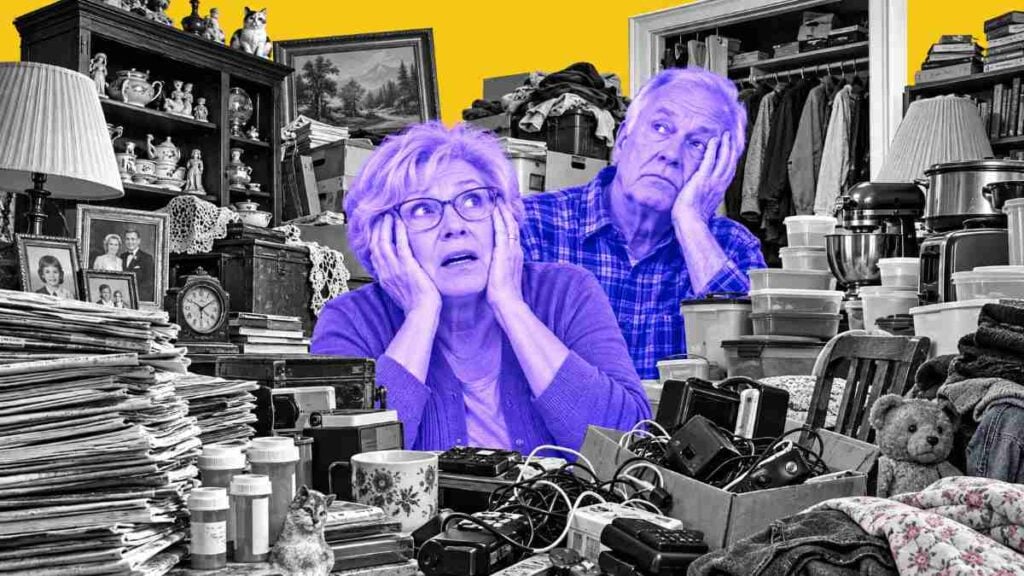
The stuff you’re saving ‘just in case’ could be costing you your safety, your space, or your peace of mind — here’s how to know what to finally let go of.
Can we be real for a second? If you grew up saving twist ties, rinsing out plastic bags to use again, or keeping “just in case” supplies in every closet — that’s not a character flaw. That’s a skill. You learned it because life taught you to. Maybe your parents lived through hard times, or maybe you did. Either way, “waste not, want not” wasn’t just a saying — it was how you got by, and it probably served you well for a lot of years.
So this isn’t one of those articles that’s going to make you feel silly for having a full pantry or a garage with a few too many boxes. You’re not a hoarder, and you’re not doing anything wrong. Most of us have some version of this going on somewhere in our homes — it’s just part of being a person who’s lived a full life and picked up a lot of stuff along the way.
Here’s what this article actually is: just a friendly heads-up about a handful of specific things that a lot of people hang onto — and how, without anyone meaning for it to happen, those things can quietly turn into safety or health risks over time. Not because you did anything wrong, but just because that’s what happens when stuff sits around for years without anyone taking a second look at it.
No judgment here. No lectures. Just some honest, useful info — the kind a good friend would tell you over coffee — so you can decide for yourself what’s worth keeping and what’s okay to finally let go of.
Ready? Let’s go through the list together.
1. Expired Medications
Okay, be honest — you’ve got a drawer or a cabinet somewhere with pill bottles going back years, right? Most of us do. Maybe it’s antibiotics from that sinus thing in 2019, or pain pills from a surgery you barely remember. You kept them because, well, why throw away perfectly good medicine? What if you need it again?
Here’s the thing, though. Medicine doesn’t stay “good” forever. Once it expires, it can lose its strength — so it might not actually work when you need it to. And some medications actually break down into something different over time, which isn’t great for your body either.
But the bigger problem is mix-ups. When you’ve got a dozen old bottles sitting next to your current ones, it’s easy to grab the wrong bottle by mistake, especially if the labels are worn off or you’re in a hurry. That’s a real risk, especially if you’re managing several medications at once.
Easy fix: Once a year — maybe make it a birthday tradition — go through your medicine cabinet. Anything expired or from a prescription you’re not taking anymore? Most pharmacies will take it back for safe disposal, no questions asked. Takes ten minutes, and your cabinet (and your safety) will thank you.
2. Duplicate Dishes, Glasses, and Small Appliances
We all have that cabinet. The one with three sets of mixing bowls, two waffle irons you’ve used twice, and enough wine glasses to host a wedding reception. You kept them “for when the family comes over” or “just in case something breaks.” Totally understandable — nobody wants to run out of forks during Thanksgiving.
But here’s what actually happens: all that extra stuff means your everyday dishes get pushed to the back, or worse, up on a high shelf you have to reach for. And reaching up or bending down into a packed cabinet is exactly how a lot of kitchen falls and strains happen. It’s not the fun kind of “just in case” — it’s the kind that ends with a sore back or a trip to urgent care.
Easy fix: Keep one “for company” set — not three. Pick your favorite pieces, and let the rest go to a family member, a donation bin, or a garage sale. Your everyday items should live at counter height, easy to grab without any gymnastics involved.
3. Stacks of Old Newspapers, Magazines, and Catalogs
This one’s so common it almost doesn’t feel like clutter — it feels like reading material “for later.” A stack by the recliner. A pile in the closet. Maybe even boxes in the garage of magazines you’ve been meaning to look through again someday.
Here’s the honest truth, though: paper piles are a real fire risk. They burn fast and hot, and if they’re sitting near a heater, a lamp, or a stove, that’s not a great combo. On top of that, paper loves to soak up moisture, which means old stacks can start growing mold or attracting bugs without you even noticing — especially in a garage or basement.
Easy fix: You don’t have to toss everything today. Just pick one pile and ask yourself: “Have I read this in the last six months?” If not, recycle it. If there’s an article or a recipe you really want to keep, snap a photo of it with your phone — you’ll actually be able to find it again, which is more than you can say for a shoebox full of clippings.
4. Furniture Crowding Walkways
Think about your living room for a second. Is there a clear, wide path from the couch to the kitchen? Or do you have to angle around a side table, squeeze past an ottoman, and step over the edge of a rug to get there?
A lot of us end up with more furniture than our space really needs — an extra armchair nobody sits in, a bookshelf that juts out a little too far, a coffee table that’s just slightly in the way. None of it seems like a big deal on its own. But when you add it all up, you end up with narrow, twisty paths through your own home.
And here’s why that matters: most falls at home don’t happen because someone tripped over something weird. They happen because someone bumped into furniture they walk past every single day. Your body gets so used to the layout that you stop really looking — and that’s exactly when an elbow catches a table edge or a foot clips a chair leg.
Easy fix: Walk your main paths — bedroom to bathroom, couch to kitchen, front door to living room — and make sure each one is at least as wide as a wheelchair would need (about three feet). If a piece of furniture is in the way, it doesn’t need to leave the house. Just move it somewhere that’s not directly in your path.
5. Boxes of Adult Children’s Childhood Belongings
You know the ones. Boxes in the garage or attic labeled with your kid’s name, packed with old school projects, trophies, yearbooks, maybe a bike they haven’t touched in twenty years. You kept it all because it felt wrong to throw away their memories — and also, kind of hoping they’d come get it someday.
Here’s the honest part: they’re probably not coming to get it. Most adult kids have their own homes now, their own stuff, and honestly, they may not even remember half of what’s in those boxes. Meanwhile, that stuff is taking up a spare room or garage space that could be doing something more useful for you right now — like a hobby space, a place to put your own things within easy reach, or just room to walk around without squeezing past boxes.
There’s also a practical side to this: garages and attics get hot, cold, damp, and dusty. A lot of what’s stored out there quietly gets ruined over the years anyway, so you might be holding onto boxes that aren’t even in good shape anymore.
Easy fix: Give your kids a real deadline — like, “I’m going through the garage this spring, come get what you want by then.” Take photos of a few sentimental things if it’s hard to part with them completely. And whatever’s left after the deadline? You get to decide what happens to it, guilt-free.
6. Outdated Electronics and Tangled Cables
We all have the drawer. Old phone chargers that don’t fit any phone you currently own. A VCR you haven’t plugged in since the Bush administration. A tangle of cables where you genuinely don’t know what half of them connect to anymore.
It feels harmless — it’s just a drawer, right? But there are two real problems here. First, tripping. Cords that run across floors or hang off the edge of a desk are an easy thing to catch a foot on, especially if the room isn’t super bright. Second, old wiring isn’t always safe wiring. Cords get worn, frayed, or brittle over time, and using an old charger or an old power strip can actually be a fire risk if the wiring inside has degraded.
Easy fix: Pull everything out of that drawer at once — yes, all of it. If you don’t know what a cord goes to, or the device it belongs to is long gone, it can go. For cords you keep, tuck them along the wall or use a cheap cord clip so nothing’s just lying across a walkway. Old electronics themselves shouldn’t go in the regular trash, by the way — most stores like Best Buy or Staples will recycle them for free.
Read Also: Tired of Household Clutter? These 25 Things Are the Perfect Place to Start
7. Overstocked Pantry Items
You know that can in the back of the pantry you’ve had since… honestly, you’re not sure? Maybe it’s from a big sale, or you just like knowing you’ve got backup food if you ever need it. That’s a totally normal habit — a lot of us grew up learning to keep a full pantry, just in case.
But here’s the catch: food doesn’t last forever, even canned stuff. Cans can rust, dent, or bulge over time, and that’s actually a sign the food inside isn’t safe anymore. Your freezer’s no different — that mystery package wrapped in foil from who-knows-when can get freezer burn, or just isn’t something you’d actually want to eat at this point.
The tricky part is that a packed pantry or freezer makes it hard to see what you actually have. So you end up buying more of something you already own, while the old stuff just sits there getting older and older.
Easy fix: Once every few months, pull everything out of one shelf or one freezer drawer at a time. Check dates, look for rust or puffy cans, and toss anything that’s past its time. Then put the newer stuff in the back and older stuff up front, so you actually use things before they go bad. Small habit, but it saves food, money, and your health.
8. Bags of Bags, Containers, and Twist Ties “Just in Case”
Okay, this one’s for basically everybody. That drawer — or bag — stuffed with plastic grocery bags. The cabinet full of takeout containers you saved because “you never know.” The little pile of twist ties, rubber bands, and random bits saved from who-knows-what.
It starts small. One bag here, one container there. But this stuff multiplies fast, and here’s the honest truth — you’re probably never going to use most of it. Most of us use maybe five containers regularly and the other forty just sit there, taking up space and making it harder to find the ones you actually want.
It’s not dangerous like some of the other stuff on this list, but it does add up to clutter that makes your kitchen harder to use and more stressful to look at. And stressful spaces make everyday life feel harder than it needs to be.
Easy fix: Set a limit for yourself — like, only keep containers that have a matching lid, and only keep a dozen bags, tops. Many grocery stores now have bins where you can recycle extra plastic bags. Everything past your limit? Let it go. You’ll survive without four hundred twist ties, we promise.
9. Decades of Paperwork and Financial Records
This one tends to pile up quietly. Old bank statements. Utility bills from ten years ago. Tax paperwork going back further than anyone can remember why. It feels responsible to keep it all — like tossing it might come back to bite you somehow.
But here’s the truth: you really don’t need most of it. Most financial experts say you only need to keep tax records for about seven years, and a lot of routine bills and statements can go after just a year, once you know they’re paid and accurate. Anything older than that is just taking up space in a filing cabinet, a closet, or a box in the attic.
And there’s a real risk hiding in those old papers, too — they usually have personal info on them, like account numbers or your social security number. If they’re just sitting in a box instead of being properly destroyed, that’s actually a way identity thieves can get your information if that paperwork ever gets lost, stolen, or even just tossed in the regular trash by accident.
Plus, let’s be honest — a stuffed filing cabinet is also just more paper that can catch fire.
Easy fix: Go through your files a decade at a time, if that feels easier. Keep the truly important stuff — birth certificates, property records, recent tax returns. Everything else that’s old and no longer needed? Shred it, don’t just toss it. Lots of banks, libraries, and office stores offer free or cheap shredding days if you don’t have a shredder at home.
10. Loose Throw Rugs and Mats
Throw rugs are one of those things that just feel homey, right? One by the front door, one in the bathroom, maybe a runner in the hallway. They add a little color and softness to a room. Nothing wrong with that.
But here’s the thing nobody really talks about — loose rugs are one of the easiest ways to trip and fall, especially the ones that slide around on hard floors like tile or wood. Your foot catches the edge, or the whole rug slips out from under you, and that’s it. It happens fast, and it happens to people who are perfectly steady on their feet otherwise. It’s honestly one of the simplest home dangers to fix, which is kind of great news.
Easy fix: You don’t have to get rid of your rugs — just make them safe. Grab some non-slip rug pads or the grippy tape made for this (you can find it at any hardware store, pretty cheap). Stick it under every rug in your home, especially ones near stairs, doorways, or the bathroom. Takes maybe twenty minutes total, and it makes a real difference.
11. Old Paint Cans, Chemicals, and Repair Supplies
Every garage has this shelf. Half-empty paint cans from a room you painted years ago. Some old cleaning chemicals. Maybe a can of something for the car that you’re not totally sure still works. You kept it all because, well, it seemed wasteful to toss stuff that might still be useful.
Here’s the catch, though — a lot of this stuff doesn’t stay useful forever. Paint can dry out, separate, or go bad, so that “just in case” can probably won’t even work when you need it. Chemicals can break down over time too, which sometimes makes them work less well, or in some cases, actually makes them more unstable. And a lot of these things are flammable, which isn’t great news when they’re sitting in a hot garage all summer.
Easy fix: Go through that shelf and be honest about what you’ll actually use. If a paint can hasn’t been opened in over a year, it’s probably time to let it go. Don’t just toss cans and chemicals in the regular trash, though — most areas have a household hazardous waste drop-off day or location. A quick search online for “hazardous waste disposal near me” will point you the right way.
12. Excess Holiday Decorations and Greeting Cards
This one’s a soft spot for a lot of people, and honestly, that makes sense. Holiday decorations carry memories — the ornaments the kids made, the lights you’ve hung every year, the cards from friends and family you just can’t bring yourself to throw out. It doesn’t feel like clutter. It feels like your life, boxed up.
But here’s the honest part — over the years, this stuff tends to grow way more than we realize. What started as a couple of boxes turns into a stack that blocks half the attic, or a closet so full you can barely close the door. And that matters more than it seems, because a blocked closet or attic isn’t just inconvenient — it can actually be in the way of an exit you’d need in an emergency, or make it harder for you to reach things you actually need day to day.
Easy fix: You don’t have to let go of the memories, just some of the boxes. Keep your true favorites — the ornaments with real meaning, a handful of cards that matter most — and take photos of the rest before letting them go. A photo takes up zero space and you can look at it just as easily. And make sure whatever you do keep is stored somewhere it’s not blocking a door, a walkway, or an exit.
Why This Actually Matters
Okay, so let’s step back for a second. Why does any of this really matter? It’s not like a messy garage is the end of the world, right?
Here’s the honest answer: falls and fires are two of the biggest risks for people over 65 — not because you’re not careful, but just because these things sneak up quietly, one pile at a time. Nobody plans to trip over a rug or have a stack of papers catch near a heater. It just kind of… happens, over years, without anyone noticing the buildup.
There’s also something people don’t think about much — if there’s ever an emergency, and paramedics or family need to get to you quickly, a cluttered home makes that so much harder. Narrow paths, blocked doors, stuff everywhere — that all costs precious time in a moment where every second counts.
And honestly, clutter just feels heavy, too. A lot of people don’t realize how much stress a packed house creates until they start clearing it out and feel that little sigh of relief. Less stuff to manage really can mean a calmer mind.
But here’s the important part, so don’t skip this: letting go of things is not the same as letting go of memories. Your kid’s height marks on the door frame aren’t going anywhere. The feeling of that holiday isn’t packed away in a box — it’s in you. You get to keep every memory that matters, even while the physical stuff takes up less space.
How to Start Letting Go (Without Doing It All at Once)
Alright, so maybe some of this hit close to home, and now you’re feeling a little overwhelmed looking around your house. Take a breath — nobody’s asking you to empty the whole place this weekend. Here’s how to actually make this doable.
Pick one category, not the whole house. Don’t try to tackle “declutter everything” in one day — that’s a recipe for burnout before lunch. Just pick one thing from this list. Maybe it’s the medicine cabinet, or that one drawer of cables. Finish that, feel good about it, then move to the next one whenever you’re ready. Slow and steady wins here.
Keep a “memory box” for sentimental stuff. Instead of keeping every card, every drawing, every little memento in its own space, pick one box — just one — for the things that matter most. When it’s full, that’s your sign to be a little more selective about what goes in. This way, you keep the good stuff without letting sentimental items take over every closet in the house.
Let family help sort — but you keep the final say. If your kids or grandkids offer to help, take them up on it. Extra hands make the work go faster, and they might actually want some of that stuff you assumed nobody wanted. But this is still your home and your decision. If you’re not ready to let something go, that’s okay. Nobody should be pushing you to toss something before you’re ready.
Ask yourself: “Would I buy this again today?” This one little question works better than almost anything else. Hold up an item and ask yourself honestly — if you saw this in a store right now, would you actually buy it? If the answer’s no, that’s usually a pretty good sign it’s okay to let it go.
There’s no prize for doing this fast. Even one drawer, one shelf, one box a week adds up over time — and every bit of it makes your home a little safer, and a little lighter.
Final Thoughts
So here’s the bottom line, friend: none of this is about erasing your past or pretending those memories don’t matter. It’s not about becoming a minimalist or having a house that looks like nobody lives there. It’s really just about giving yourself a little more room to breathe, a little more safety walking around your own home, and a little less to keep track of and worry about.
You’ve spent a lifetime taking care of things — your family, your home, your stuff. It makes total sense that letting go feels hard sometimes. But think about how good it feels when a drawer finally closes easily, or when you walk through a room without having to think about where to step. That’s not losing something. That’s gaining something.
You don’t have to do this today. You don’t have to do it all at once. Just pick one small thing from this list — one drawer, one shelf, one pile — and start there. That’s it. That’s the whole trick.
Because here’s the truth: small changes really do add up to big freedom. A little less clutter means a little more ease, a little more safety, and a lot more room to actually enjoy your home instead of just managing it.
You’ve got this. One drawer at a time.
Read Also: 12 Subtle Hoarding Habits You Might Not Even Notice